- Genre
- Mythological sakme
- Source status
- folkloric
- Motifs
- red rooster, millstones, carried grain, Candlemas candle, daughter-in-law’s release
The sakme
In one homestead the parents had an Aitvaras that carried grain. Their daughter-in-law was forced to grind and grind, but the grain trough never emptied.
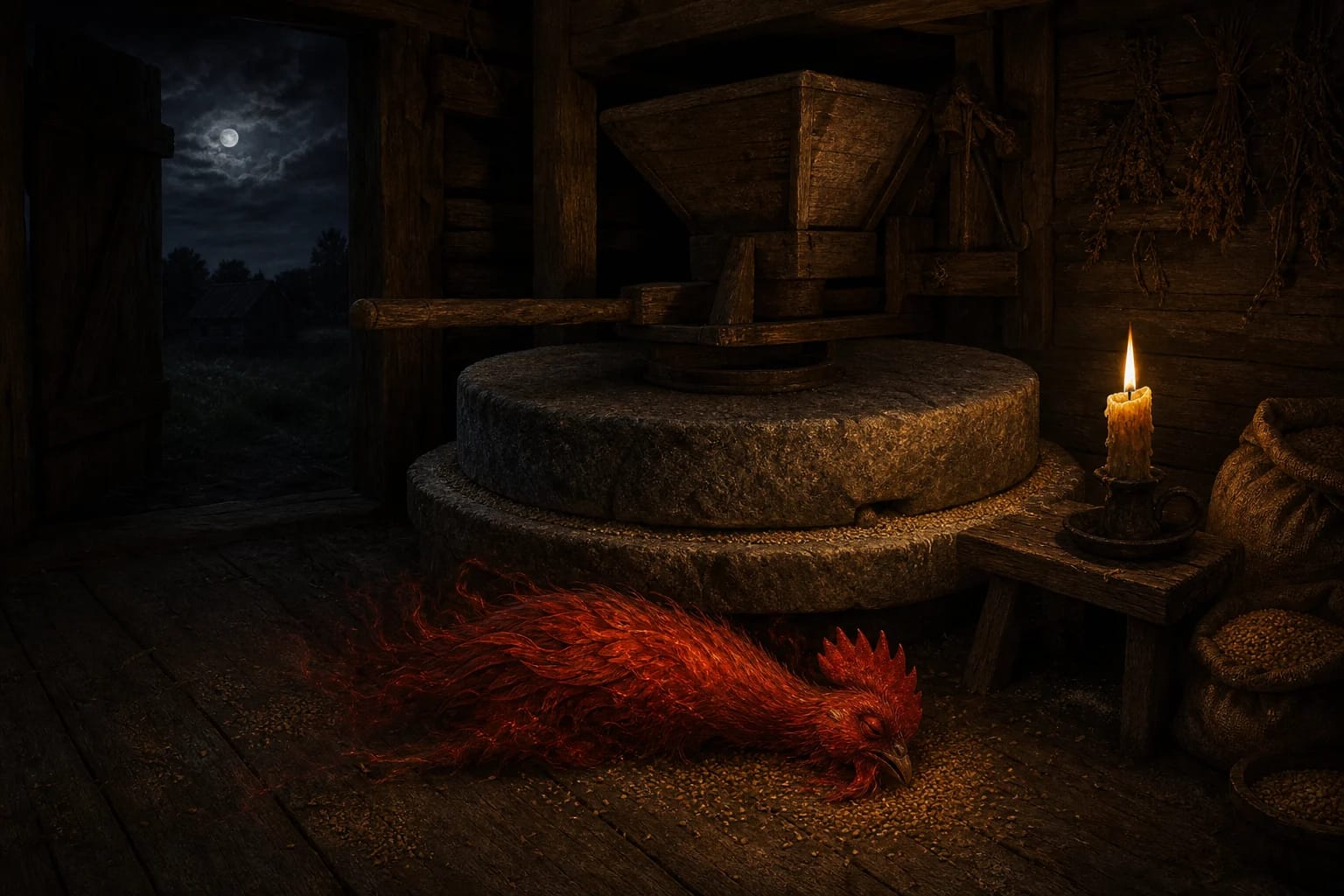
A neighbor advised her to light a Candlemas candle, cover it with a new pot, and uncover it when the grinding began. The daughter-in-law did so.
When she lifted the pot she saw a red rooster on the trough. It was vomiting grain, so the grinding never ended. The daughter-in-law grabbed a stick, struck, and the rooster fell.
From then on she could grind everything that was there. The old people understood that their Aitvaras had been killed, but the son admitted that the daughter-in-law had already been tormented too much at the millstones.
Interpretation: what does the killed Aitvaras mean?
This sakme clearly shows Aitvaras’ double nature. It brings wealth to the owners, but that wealth becomes another person’s suffering.
The red rooster joins images of fire, household, and life. Yet here it does not protect; it keeps pouring work onto the daughter-in-law’s shoulders.
Her blow is a liberation from endless obligation. The sakme asks whom magical prosperity serves and who pays for it.
The source variant
Vaikams.lt: „Užmuštas aitvaras“, complete legend text. An editorial retelling of the specific cited variant, checked against its complete source narrative. This is not a literal transcript.
Millstones and endless work
The millstones become a symbol of exploitation. As long as Aitvaras pours grain, the work never ends.
The story therefore also has social meaning: magical wealth is not good if it rests on unseen human misery.