- Genre
- Mythological sakme
- Source status
- folkloric
- Motifs
- Aitvaras egg, hatching under the arm, secret wealth, mother’s suspicion, sudden prosperity
The sakme
A nineteen-year-old farmhand never went anywhere from home. His mother wondered what was wrong with him and one day sent him out to the bathhouse.
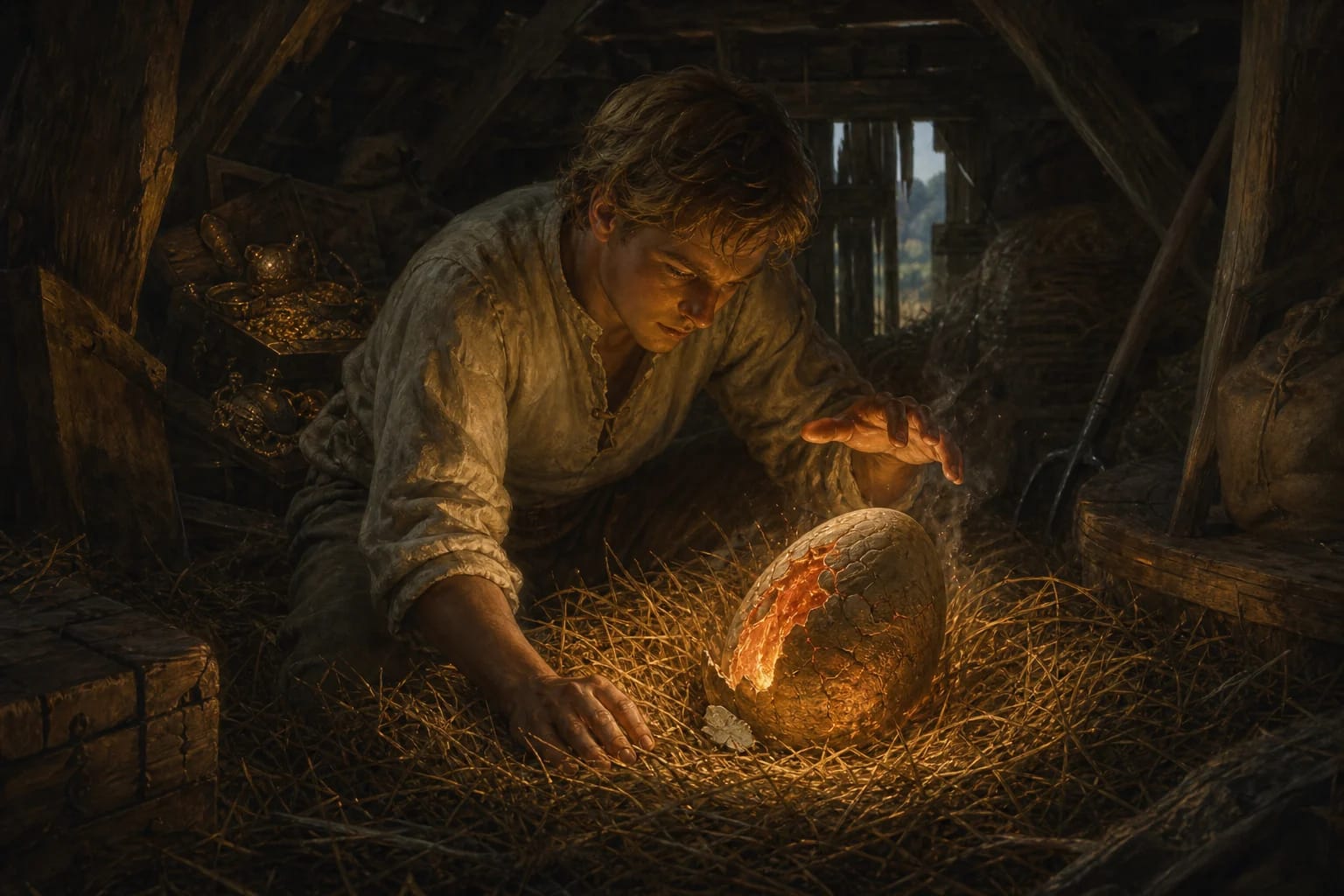
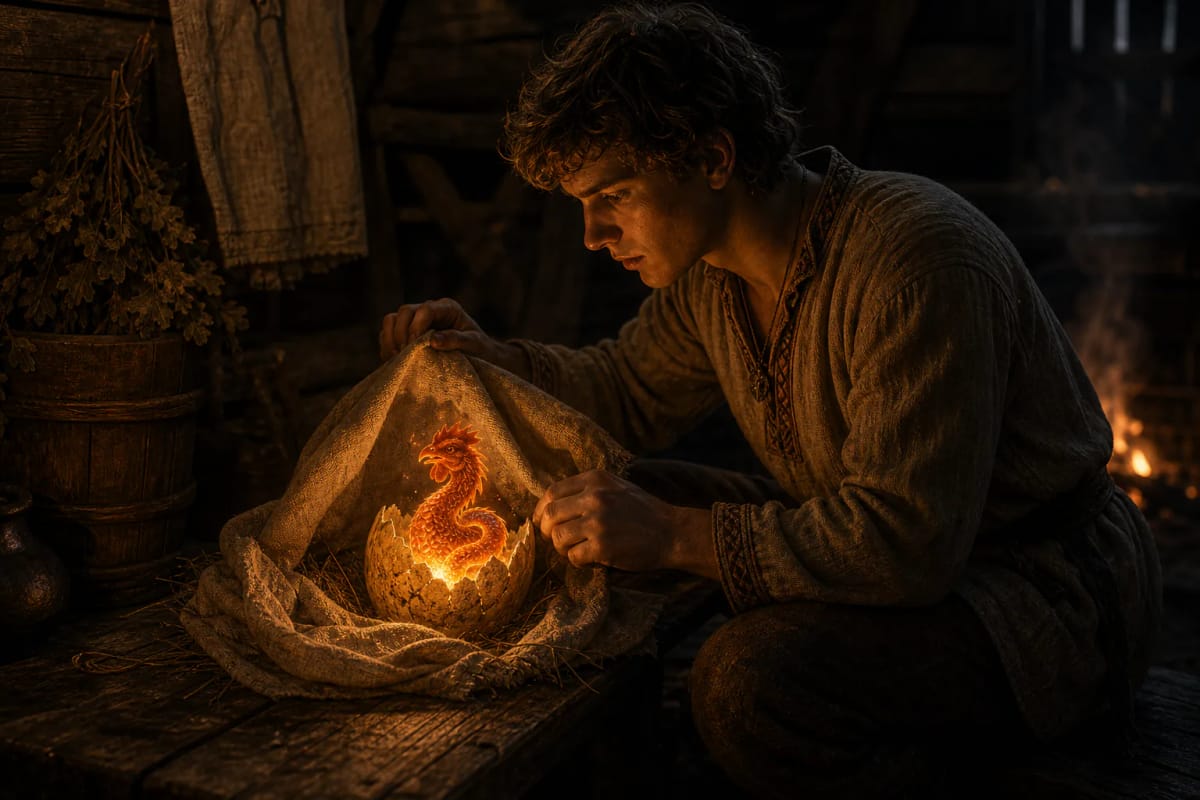
Before going, he secretly took a wrapped egg from under his arm, set it down, and blew on it. His mother could not resist looking: the egg had already cracked, and a living head was sticking out.
The mother was frightened and asked what sort of devil he was hatching. The young man told her to keep quiet: if she wanted to be rich, she should not interfere.
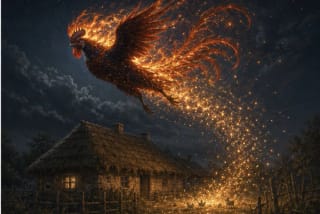
When the Aitvaras had hatched, wealth began to flow into the house. Horses neighed in the stables, livestock prospered, and people said that in earlier times many had kept such Aitvarai.
Interpretation: what does a hatched Aitvaras mean?
In this sakme the Aitvaras does not simply fly in; it is hatched. That means a deliberate human wish to bring into the home a dangerous wealth-bearing force.
Hatching it under the arm is intimate and secret. The Aitvaras becomes almost a creature grown from body heat, so the bond with it is deeply personal.
The mother’s question, “what are you hatching?” reveals moral tension: wealth arrives, but its source is unclear. The sakme does not celebrate wealth without reservation; it leaves unease.
The source variant
Lietuvių tautosaka, IV (1967), no. 510, p. 529–530: „Berno išperėtas aitvaras“. An editorial retelling of the specific cited variant, checked against its complete source narrative. This is not a literal transcript.
Wealth of unclear origin
Aitvaras wealth often raises the question: is prosperity a blessing if it is brought by a being that may steal from others?
For that reason this sakme is well suited to explain the Lithuanian folklore view of sudden enrichment: it tempts, but always casts a shadow.