- Genre
- Priest-seer legend
- Source status
- chronicle tradition
- Motifs
- Lizdeika, priest, dream interpretation, Gediminas, Iron Wolf, Vilnius
Lizdeika the priest, Interpreter of Gediminas' Dream, Priest of the Vilnius legend
The legend
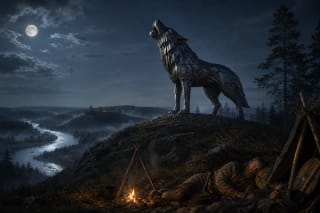
Lizdeika appears when Gediminas seeks meaning after his night vision. The ruler has seen an Iron Wolf howling on a hill, but the dream is not yet a decision. It becomes one only when the priest explains it.
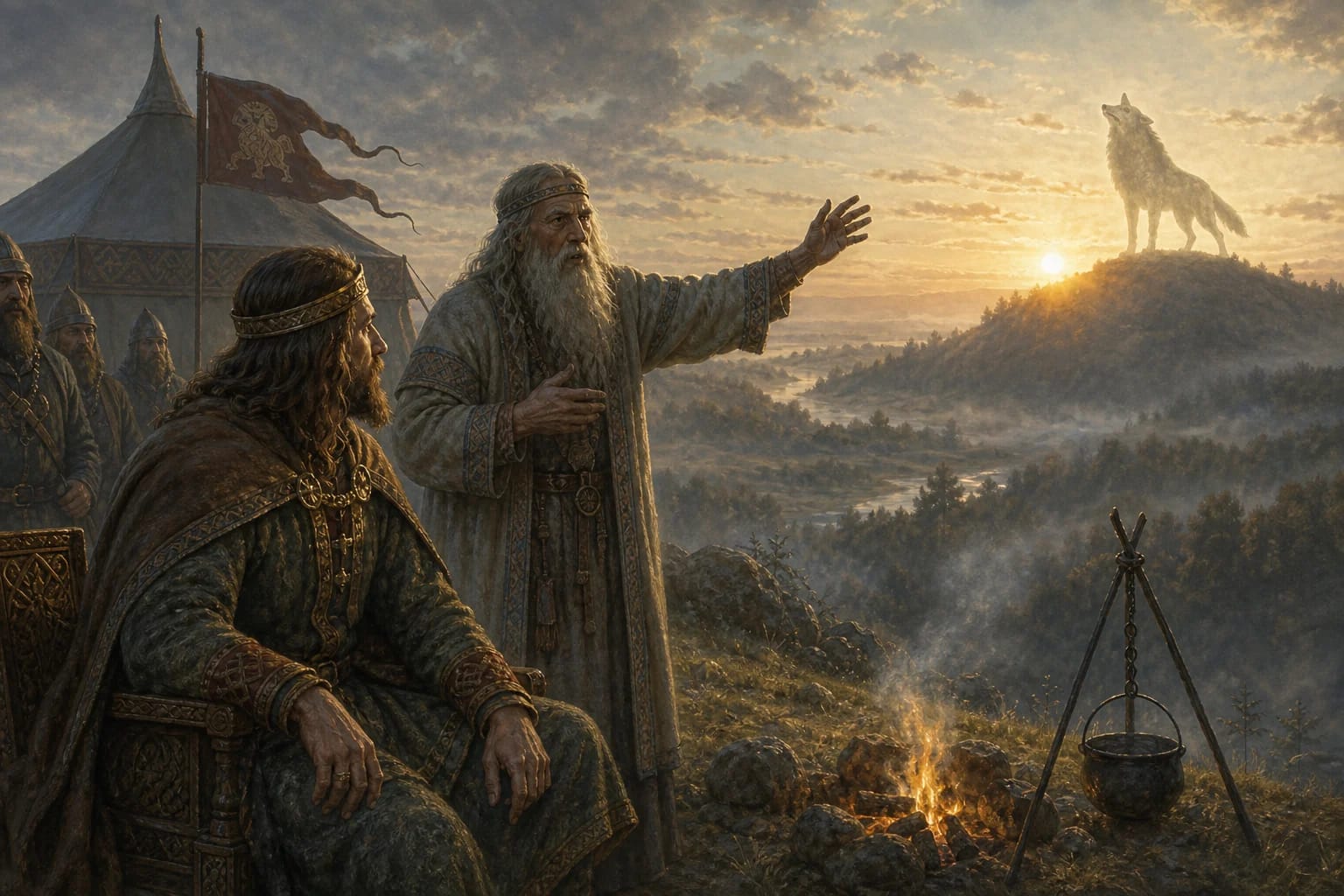
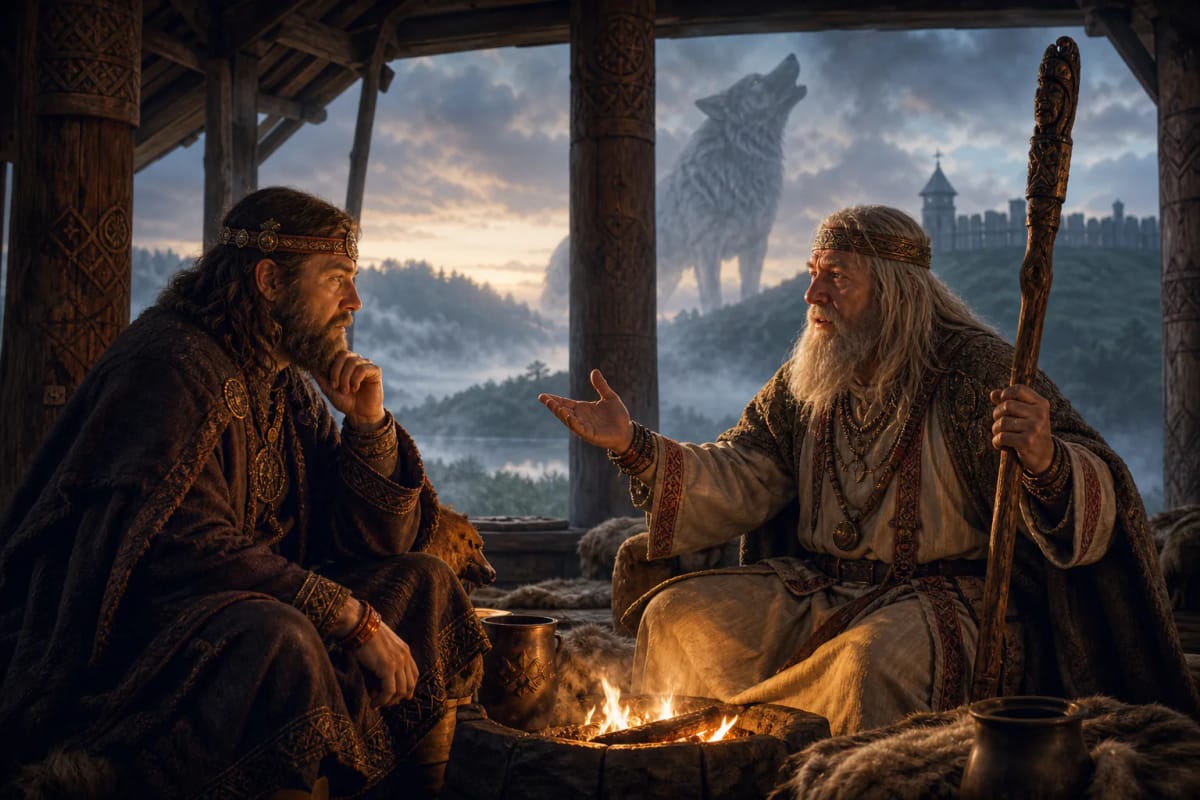
Lizdeika hears the dream and recognizes that the vision speaks about a city. The Iron Wolf means a strong castle, and the howl means the future capital's fame. A city must rise where the sign appeared.
Without Lizdeika, Gediminas' dream would remain a strange image. With his interpretation, it becomes the founding prophecy of Vilnius.
Interpretation: what does Lizdeika mean?
Lizdeika shows that old rulership needs not only force but also an interpreter of meaning. Gediminas can hunt, rule, and build, but the sign is read by the priest.
His figure joins political and sacred fields. The founding of a capital is not presented only as a practical choice of site; it receives a higher, prophetic foundation.
Lizdeika's speech also shows the power of language. He does not build the castle, yet his words direct the action. In legends, a correctly spoken interpretation can change the world.
In modern terms, Lizdeika can be read as a figure of cultural memory. He shows that a city understands itself through a narrative, and a narrative needs an authority to explain why the place matters.
The study of religion offers yet another reading. In his essay „Gediminas ir Lizdeika", Gintaras Beresnevičius regards Lizdeika not as an ordinary dream interpreter but as the chief priest, the krivių krivaitis, so that the founding of Vilnius appears as a joint work of secular and sacred power: without Lizdeika's sanction the dream would still mean nothing, and the very idea of founding the capital first sounds from the priest's lips. From this perspective Gediminas establishes the political centre where a religious centre already operated, by the Šventaragis valley. This is a researcher's reconstruction, which must be distinguished from the chronicle text itself, but it helps to see why the priest plays such an important role in the legend.
History, sources, and careful reading
VLE describes Lizdeika as a legendary priest connected with the interpretation of Gediminas' Dream. That source status matters: this is not a securely documented biography but a character shaped by chronicle tradition.
Lizdeika's name is also tied to stories of origin and lineage. Such links are typical of the chronicles, in which the beginnings of rulers, families, and cities are explained through authoritative figures.
Beresnevičius's interpretations read Lizdeika in the broader mythic context of Gediminas' Dream. Still, the page must clearly distinguish: in the sources Lizdeika acts as a legendary interpreter, while broader religious reconstructions belong to the field of scholarly interpretation.
Lizdeika's place in the Vilnius story
The Iron Wolf is usually remembered first, but without Lizdeika it has no clear meaning. The priest turns howling from a threat into the future voice of the city.
That makes Lizdeika a mediator between vision and action, and one of the key figures in Vilnius' symbolic beginning.