
Lithuanian traditional foods
Cepelinai
Cepelinai, also called didžkukuliai, are one of the most recognizable dishes of Lithuanian cuisine: large dumplings formed from grated and boiled potato mass, usually filled with meat, curd, or mushrooms and eaten with sour cream and crackling sauce.
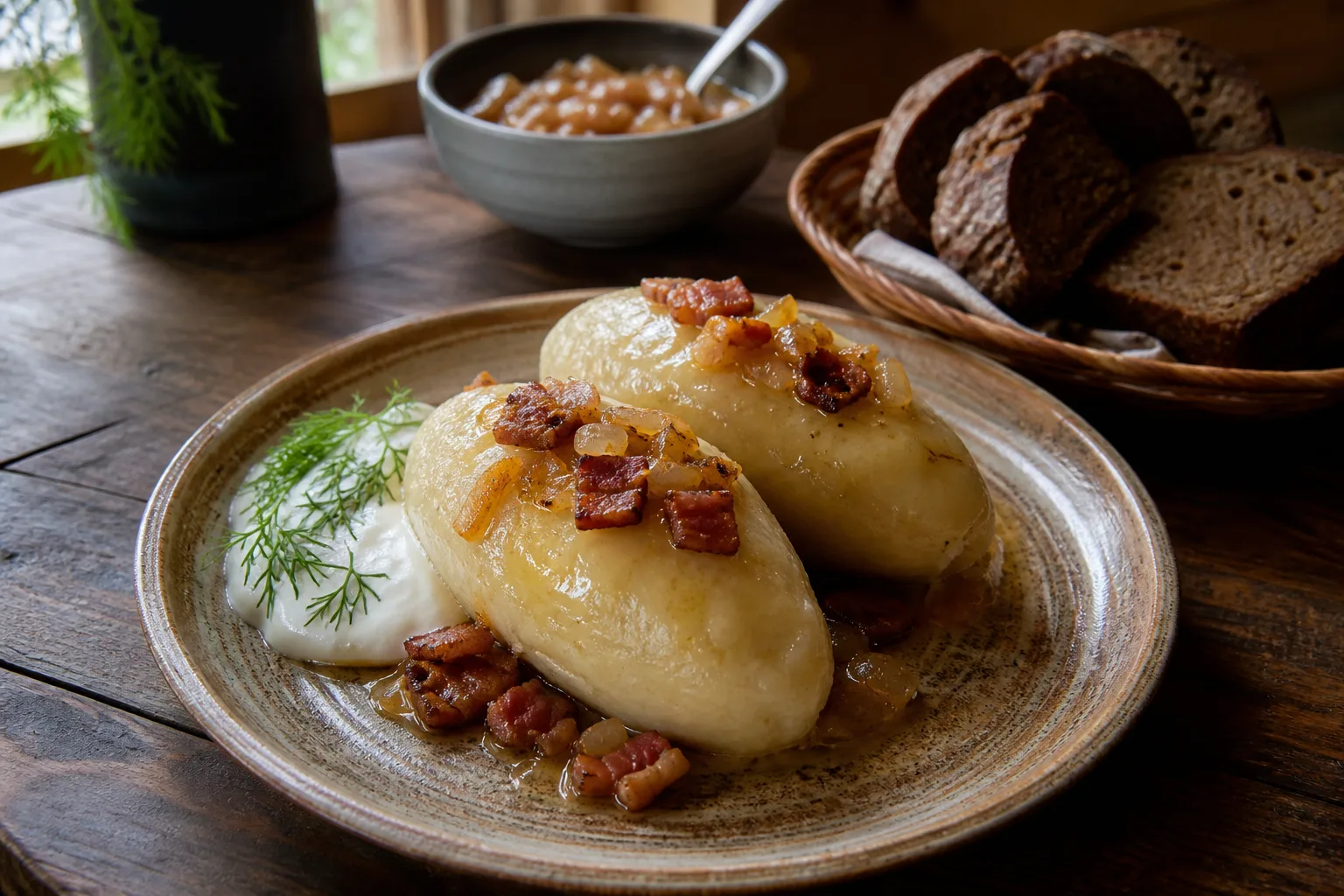
Food and heritage context
- Category
- Potato dishes
- Type
- boiled large potato dumplings with filling
- Heritage status
- living tradition
- Context
- Potatoes, didžkukuliai, ground meat filling, curd filling, cracklings, sour cream, Sunday lunch
Names and variants
Didžkukuliai, Potato didžkukuliai
What are cepelinai?
Cepelinai are large potato dumplings made from raw grated potatoes and a small share of boiled potatoes. The filling is usually meat, but Lithuanian homes also make curd, mushroom, and mixed versions.
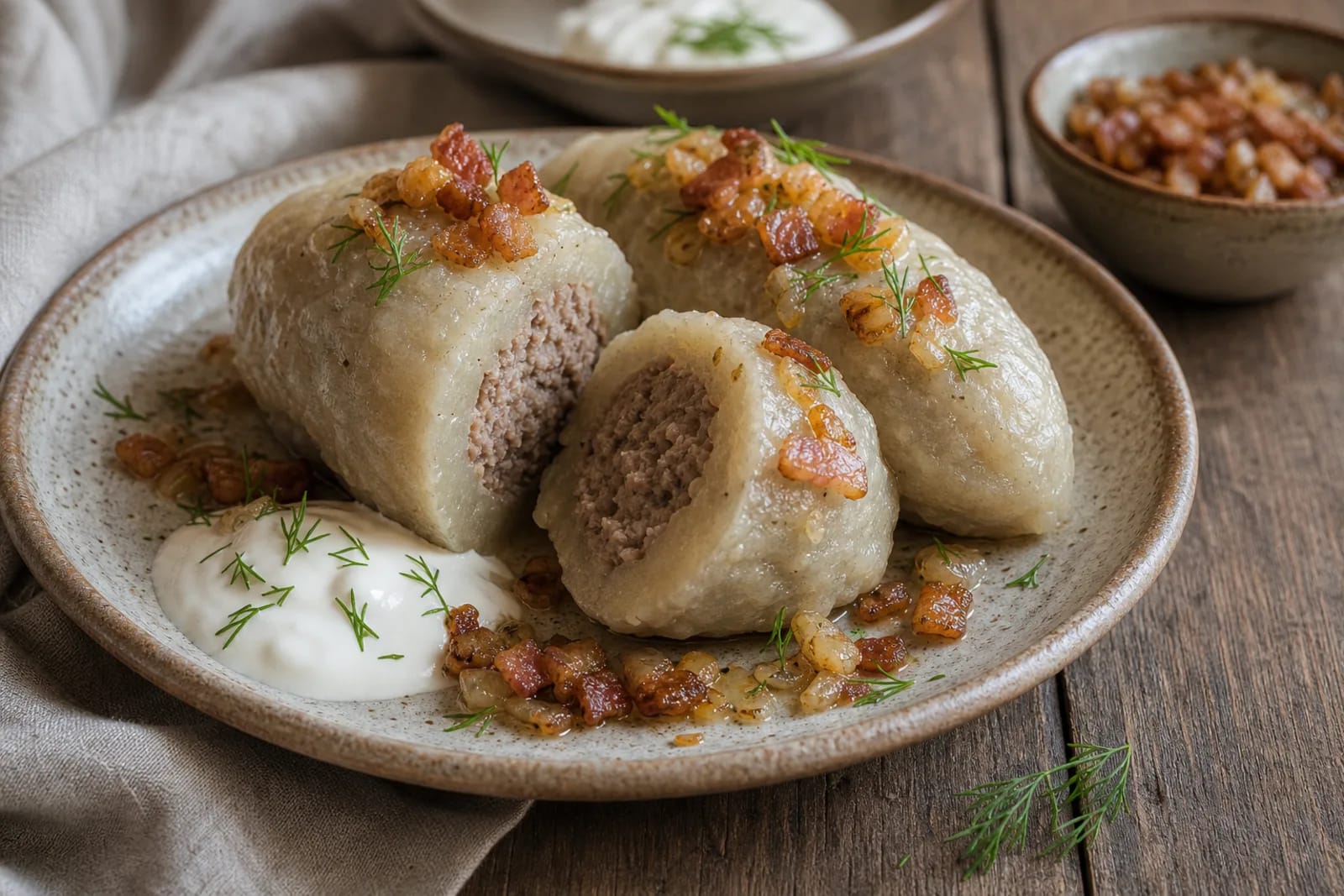
The essence of the dish is control of the potato mass: starchy potatoes, thorough draining, returned settled starch, and gentle cooking. Cepelinai are therefore both a recipe and a technique.
History of Cepelinai in Lithuania
Cepelinai are not a medieval dish: their emergence is tied to the potato's establishment in Lithuanian peasant cooking and the later abundance of potato dishes. The name is linked with the shape of airships, while the older Lithuanian name is didžkukuliai. Potatoes were brought to Europe from South America in 1565 to Spain and 1570 to England, and reached Lithuania only in the 17th century, initially spreading through manors, so the forerunners of cepelinai could not have appeared earlier.
The Universal Lithuanian Encyclopedia's overview of Lithuanian foods connects potatoes with late-17th-century Lithuania, wider spread in the 19th century, and a rich tradition of potato dishes. Didžkukuliai, called cepelinai, are identified there as a dish that spread in the 20th century, so their history is later than the traditions of rye bread, groats, or old soups.
Today cepelinai are often called a national dish, though this is more a sign of modern Lithuanian identity than the only old core of the cuisine. They became popular as a filling food for families, taverns, and festive lunches.
Fillings and Sauces
The meat filling most often uses pork or a pork and beef mixture. Curd cepelinai are lighter and are often seasoned with salt, egg, and sometimes herbs. Mushroom filling suits autumn and fasting interpretations especially well.
The classic sauce is cracklings with onions and sour cream. In some places the sauce is made thicker with sour cream in the pan, but the main point is that it should support the potato mass rather than cover it.
How to Recognize Good Cepelinai
Good cepelinai should hold their shape without being hard. The outside should be smooth, the inside juicy, and the potato mass neither watery nor rubbery.
Grey cepelinai are not a flavor mistake: raw potato mass naturally darkens. Some cooks use citric or ascorbic acid, but traditionally the main things are to work quickly and use the right potatoes.
Recipe
How are cepelinai made?
The classic home version relies on grated raw potatoes, a small amount of boiled potato, returned settled starch, and a juicy pork filling. The key is not to overboil and to keep the water at a calm simmer so the cepelinai do not tear.
Ingredients
Method
- Boil the four additional potatoes in their skins, then peel and mash them. Separately peel and finely grate the 2 kg of raw potatoes.
- Squeeze the grated potatoes firmly through cloth. Leave the liquid in a bowl until starch settles at the bottom; pour off the water and return the starch to the potato mass.
- Mix the grated potatoes, mashed boiled potatoes, starch, and salt. The mass should hold together but not be watery.
- Mix the meat with one chopped onion, salt, pepper, and marjoram. If using the optional egg, stir it into the filling.
- With wet hands, form flat potato rounds, add filling, seal the edges, and shape into elongated cepelinai.
- Bring a large pot of salted water to a boil, reduce to a gentle simmer, and add the cepelinai. Cook for about 25-35 minutes depending on size.
- For the sauce, fry diced bacon or salt pork with the second chopped onion. Serve with sour cream.
Notes
If the mass is loose, extra potato starch helps, but do not add too much or the cepelinai will become rubbery.
The water should barely move while cooking. A strong boil often tears the potato casing.


Cepelinai: frequently asked questions
How are cepelinai different from didžkukuliai?
They are the same dish. Didžkukuliai is the older Lithuanian name, while cepelinai became common because of the elongated airship-like shape.
Why do cepelinai fall apart while boiling?
The most common causes are too-wet potato mass, too little starch, water boiling too hard, or poorly sealed edges.
What potatoes are best for cepelinai?
Starchy, floury potatoes work best. Watery potatoes need more starch and more often give a soft, unstable mass.
Do cepelinai have to be made with meat?
No. Curd, mushroom, and mixed fillings are common in Lithuanian cooking.
Can cepelinai be frozen?
Yes, but it is most convenient to freeze shaped uncooked cepelinai or separately prepared filling. Thawed potato mass can lose texture.
Why do cepelinai darken?
Raw grated potatoes oxidize and darken. This is natural, especially if the mass stands for a long time.
How long should cepelinai be boiled?
Medium-sized cepelinai are cooked for about 25-35 minutes after being placed in gently simmering water.
What are cepelinai traditionally served with?
Most often with sour cream and crackling-and-onion sauce. Fermented vegetables or black rye bread also go well with them.