- Category
- Household beings
- Domain
- Home, homestead, hearth, order, protection, sacredness of daily life
- Source status
- folklore
house spirit, domestic spirit
Who is Naminukas, or the house spirit?
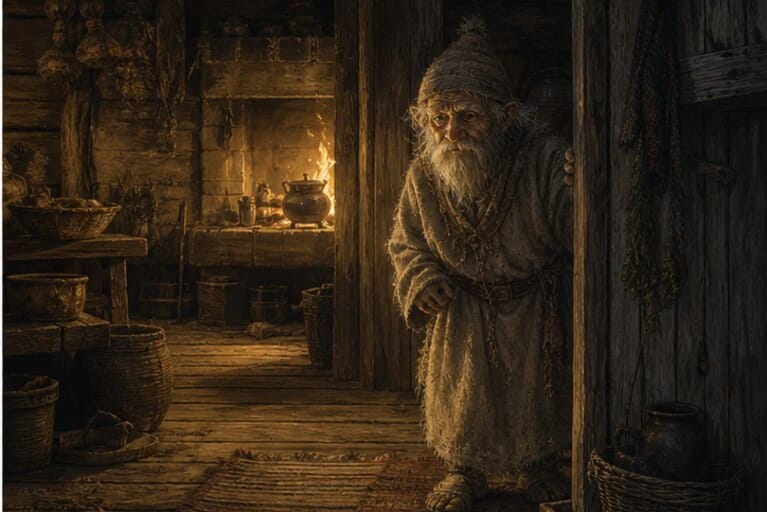
Naminukas, or the house spirit, is a broad image of a mythical being that protects the home. It is not one canonical character, but a way of explaining that in traditional culture the house has its own protecting and order-maintaining force.
In Lithuanian mythology, the home is not just a building. It is hearth, threshold, yard, stove, family, food, livestock, and boundaries. The image of Naminukas helps show this domestic logic of sacredness in one place.
Sources for Naminukas
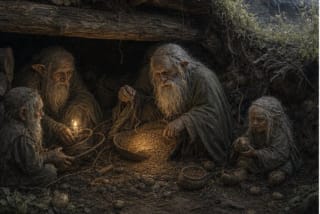
The house-spirit theme rests on folklore, household customs, and a wider system of protective beings of the home. Some of its functions are taken up by kaukai, Žaltys, Gabija's fire, or other images of domestic guardianship.
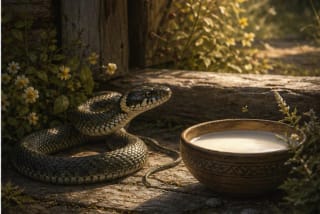
Naminukas is used here as a general name for a house spirit. Kaukai and the žaltys, or grass snake, have distinct names and traditions, so these terms are not simply interchangeable.
The home as sacred space
In traditional culture the home has boundaries: threshold, doors, stove, hearth, corners, yard. Each boundary may be protected, respected, or considered dangerous if violated.
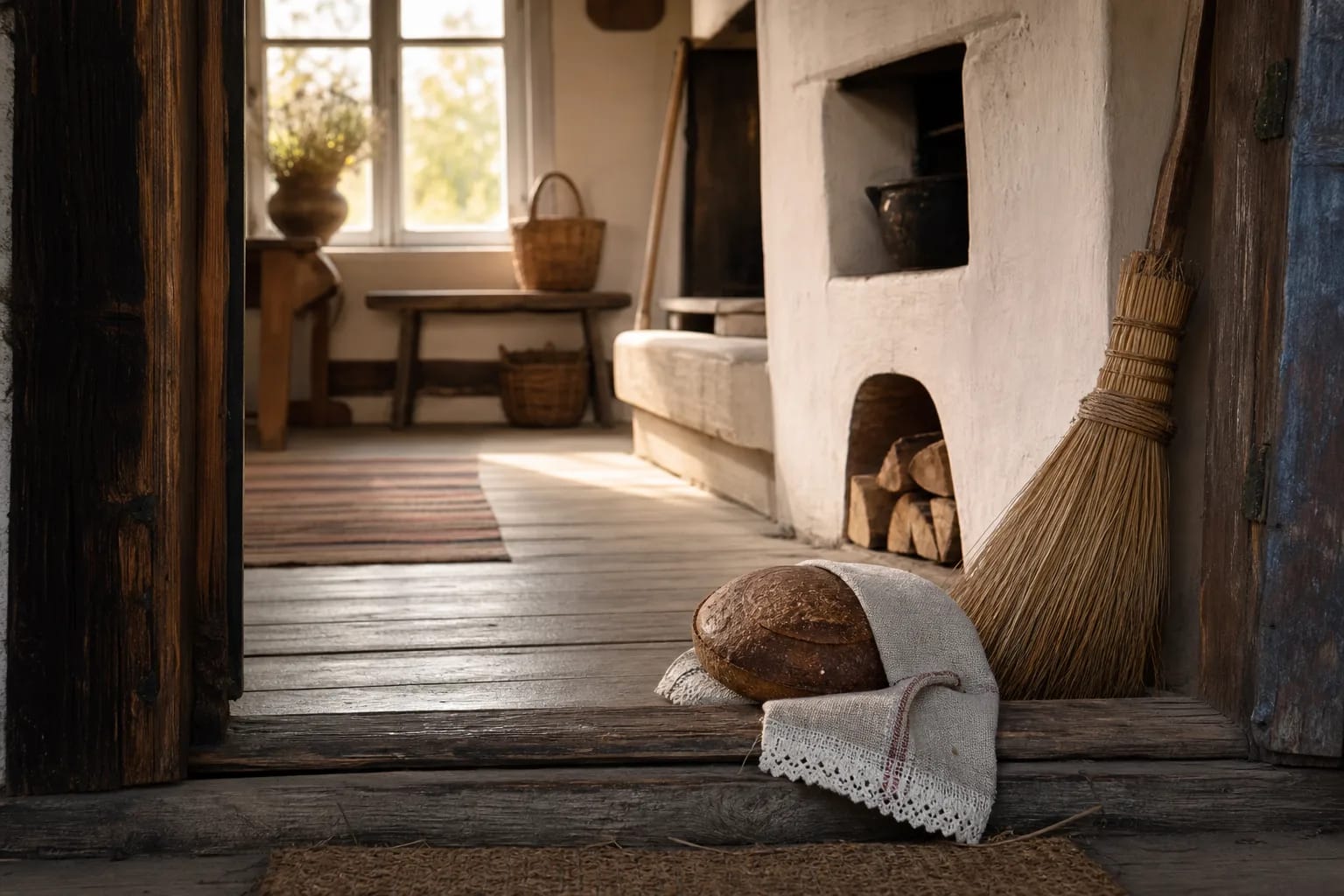
Naminukas embodies this order of the home. He is not an outside hero, but a very close guardian of the domestic world. In beliefs such a spirit is often imagined as living behind or under the stove, sometimes appearing as a small old man. When respected and when the household is well kept, he brings luck and harmony to the home; if neglected or insulted, he can do harm. That makes his image close to kaukas and aitvaras.
Naminukas, Kaukai, and Žaltys
Kaukai are more often linked with abundance and underworld benefit, while Žaltys is linked with a sacred household guardian and vital powers. Naminukas helps bring these themes together into a general idea of the house spirit.
This distinction matters for accuracy: Naminukas speaks about the general domestic spirit, Kaukai about abundance, and Žaltys about the sacred animal of the homestead.
Symbols of Naminukas
The symbols of Naminukas are hearth, threshold, stove, yard, house corners, order, and protection. They show that household sacredness is everyday, not only festive.
Gabija is also associated with the household hearth, but she is described as a fire goddess, while the naminukas is a house spirit.
Naminukas today
The image of the naminukas links the comfort of home with the care needed to protect it. The threshold marks the entrance to the household, while the hearth is a place of everyday warmth and food.
Lithuanian household-protection traditions connect the homestead, abundance, the grass snake, and kaukai in different ways: the snake guards the home, while kaukai are associated with plentiful food and farm produce. A general term for a house spirit does not erase those distinctions.