- Category
- Field and nature spirits
- Domain
- Fields, grain, rye, harvest, field boundary, frightening agrarian beings
- Source status
- folklore
rye spirits, grain spirits
What are field spirits in Lithuanian folklore?
Field spirits are a broad layer of mythical beings active in fields, rye, grain edges, and harvest space. This is not one specific being, but a category of agrarian legends and prohibitions.
In traditional culture the field is a place of work and food, but also a dangerous boundary. Where grain grows, there is not only a crop, but also stories about beings who guard, frighten, or punish.
Sources for field spirits
The theme of field spirits rests on folklore and agrarian beliefs. Sources may mention different names and local forms, so it is most useful to understand them as a broad field of farming-related beings.
This interpretation helps us see not only isolated names, but a wider context: the field as a boundary, grain as harvest space, and prohibitions that protect both people and a community's food.
Field spirits and children
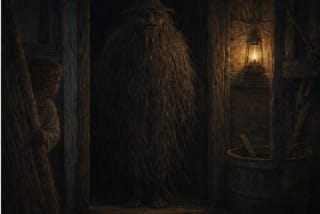
Some stories about field spirits work as warnings to children: do not go into the rye, do not break the grain, do not wander in the field, because a frightening being may be there.
This function is close to Baubas. The difference is that field beings are tied to a concrete agrarian space: rye, the edge of grain, harvesting, and protection of the crop.
The field boundary and the harvest
The edge of a field is an important mythological place. It is the boundary between the homestead and open space, between land controlled by people and the unknown.
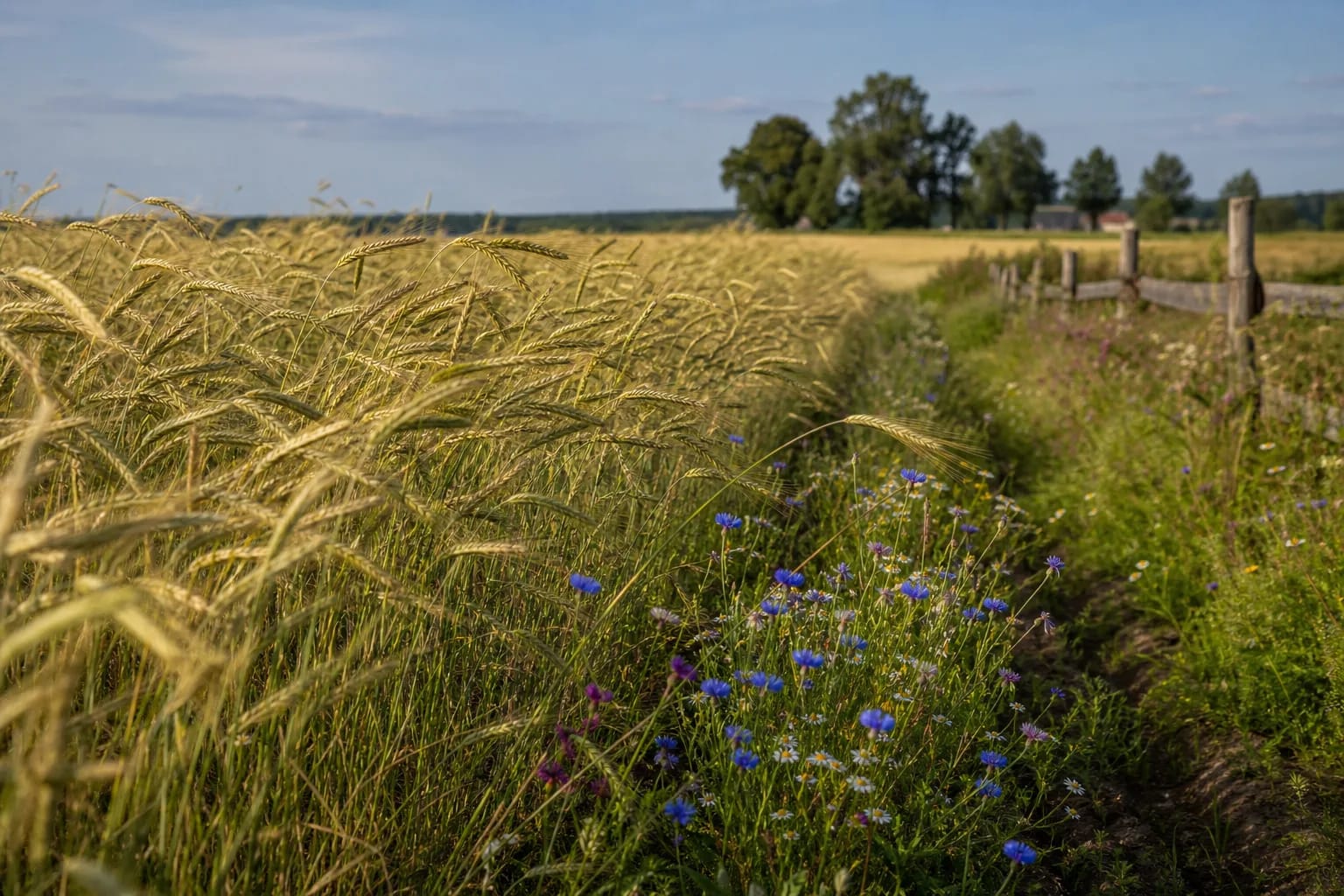
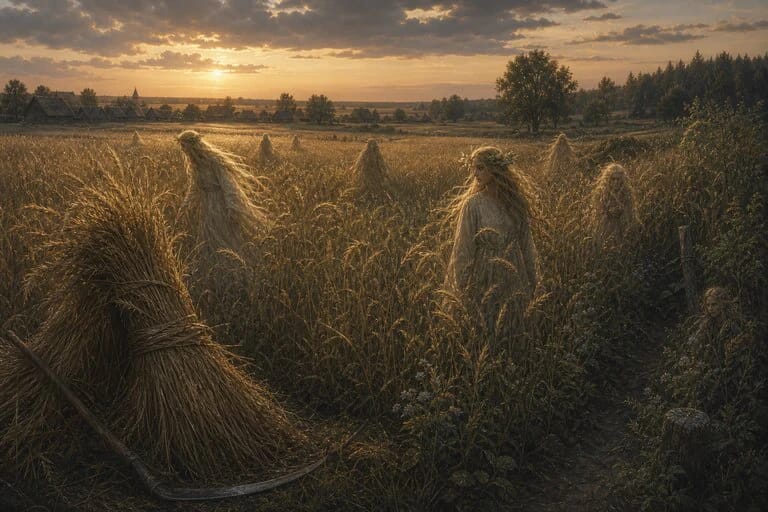
The harvest has a sacred undertone here. Grain feeds the community, so its field may be guarded by stories, prohibitions, and images of beings. The clearest such figure is the rugių boba, the rye woman, sometimes the rugių senis, the rye old man, imagined as living in the crop. It was believed that during reaping she withdrew into the last uncut tuft or sheaf, so harvest-ending rites and the final sheaf also carry the meaning of honoring this spirit.
Symbols of field spirits
The most important symbols of field spirits are rye, grain, harvest, edge, evening, wind in the fields, fear, and the boundary of the crop.
These symbols connect mythology with Lithuanian folk songs, work customs, Žolinės, and the agrarian calendar.
Field spirits today
Today field spirits may seem like a niche topic, but they show that mythology lived not only in sacred sites, but also in the everyday field of work.
They help explain images of rye, grain, field edge, and harvest that in Lithuanian tradition protected both food and human behavior.