
What Kind of Age Is This? lyrics and meaning
Kas do gadynė ant svieto,
Kas do čėsas, do adyna?
Visi žmonės persimainė,
Nebėr senosios gadynės.
Seniau žodį brangiai laikė,
Dabar žodis vėjais eina.
Seniau duoną prakaitu valgė,
Dabar nori be darbelio.
Kas do gadynė ant svieto,
Kad vaikai tėvų neklauso?
Tėvas kalba, motė verkia,
O jaunimas juokais laiko.
Vai tu sviete, margas sviete,
Kur tavoji senoji tvarka?
Kas do čėsas, do adyna,
Kad bėda bėdą gena?
View illustration
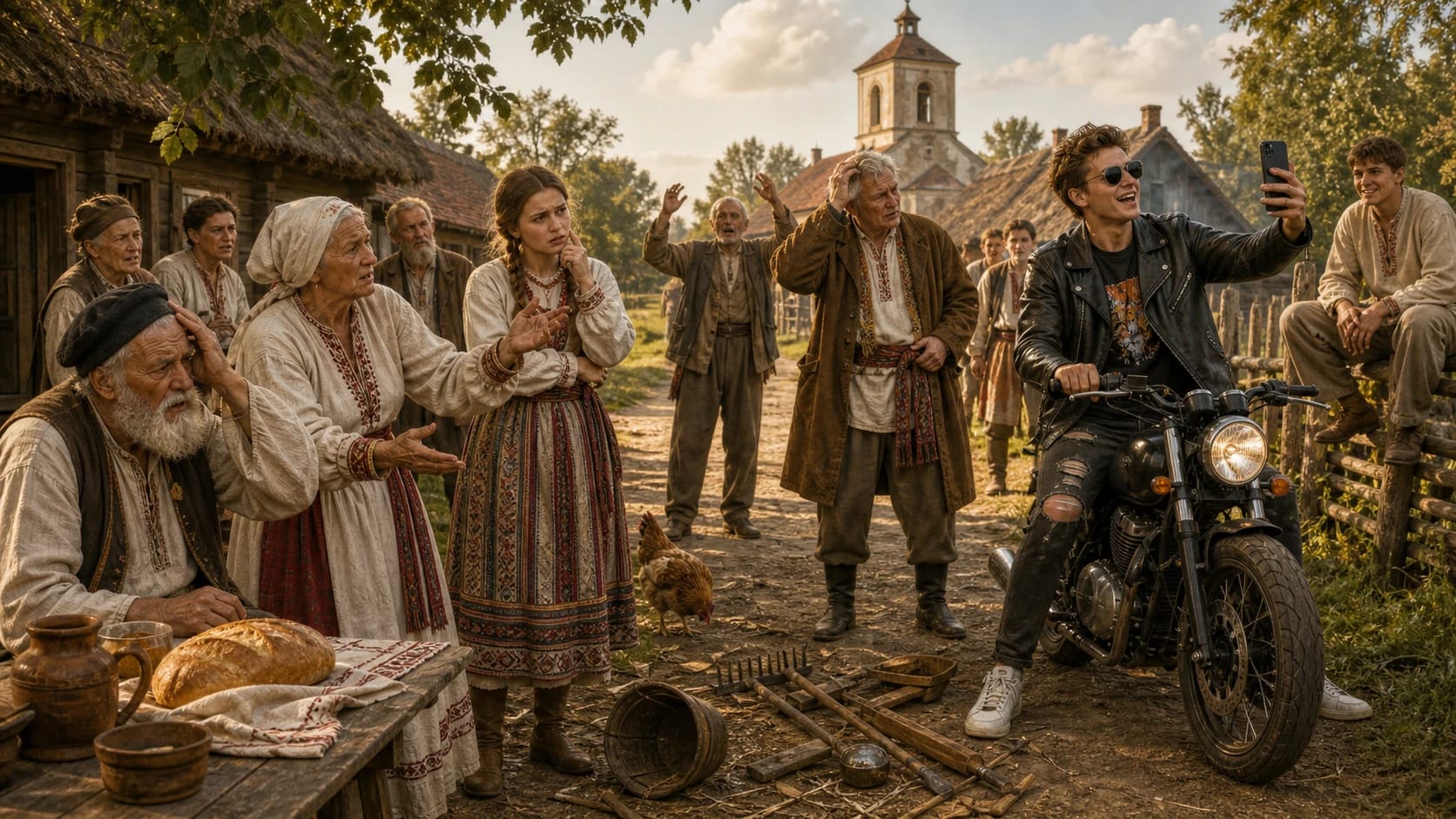
What Kind of Age Is This?: song interpretation
The song's question, "what kind of age is this," is not neutral. It is amazement, indignation, and comic lament all at once. The narrator compares the present with an imagined older order in which a word, work, and obedience were firmer.
Songs of this kind matter because they preserve not only beautiful feelings, but also the community's self-criticism. Svietas in the song is the broad order of human society, and its collapse allows the singer to speak about family, village, labor, and morality within one folk satire.
What Kind of Age Is This?: symbols and phrases
- Gadynė
- A time or era. In the song it means a changed present that the narrator no longer understands.
- Svietas
- The human world or society. The word gives the song a wider social scale, not only a family scale.
- Old order
- An idealized past. It is used to criticize the present, even if that past itself was not simple.
- Trouble drives trouble
- An image of one worry pushing another. It shows changed times as constant pressure.
What Kind of Age Is This?: song history
This title belongs to the field of social complaint and satire songs. In archives it appears in more than one exact form: "Kas do gadynė ant svieto," "Kas dabar dedas ant svieto," and "Kas do čėsas, do adyna." The opening differs, but the same question about the svietas, the world of people, and the breakdown of the times remains.
The song's Slavicisms and dialect forms are not mistakes. They create the tone of living speech, in which the older generation asks why customs, respect, work, and family order have changed. For that reason, this song is best understood as a traditional comment on modernizing everyday life.
What Kind of Age Is This?: sources
What Kind of Age Is This?: frequently asked questions
What does "kas do" mean?
It is a dialect and Slavic-influenced form close to asking "what kind of." It gives the song a spoken tone.
What is gadynė?
Gadynė means a time, era, or age. In the song it is used with indignation about the changed order.
Is this a humorous song?
It has features of humorous social satire, but it is also a real complaint. Such songs often balance laughter with moral unease.
Why are there so many title variants in archives?
The title is often taken from the first line, and singers pronounced it differently. That is why the svietas songs form a family of related variants.
What does the song criticize?
It criticizes changing times: lack of respect, avoidance of work, broken promises, and young people drifting away from the old order.
Should the text be corrected into standard Lithuanian?
No. The dialect and older words are part of the song's character and preserve its social voice.