
The Grey Horse Neighed at the Manor lyrics and meaning
Žvengė šyvas žirgelis an dvaro,
Verkė jaunas sūnelis nevalioj:
Vaduok mane, tėvuli, vaduoke,
Nor ir palšus jautelius parduoke.
Veliai tave, sūneli, nematyč,
Nei ką palši jauteliai patrocyč.
Žvengė šyvas žirgelis an dvaro,
Verkė jaunas sūnelis nevalioj:
Vaduok mane, motula, vaduoke,
Nor ir margas karvelas parduoke.
Veliai tave, sūneli, nematyč,
Nei ką margos karvelės patrocyč.
Žvengė šyvas žirgelis an dvaro,
Verkė jaunas brolalis nevalioj:
Vaduok mane, sesula, vaduoke,
Nor ir margas skrynelas parduoke.
Veliai tave, brolali, nematyč,
Nei ką margos skrynelės patrocyč.
Žvengė šyvas žirgelis an dvaro,
Verkė mano bernelis nevalioj:
Vaduok mane, mergele, vaduoke,
Nor ir plonas drobeles parduoke.
Aš drobeles parduosiu,
Tave, berneli, išvaduosiu.
View illustration
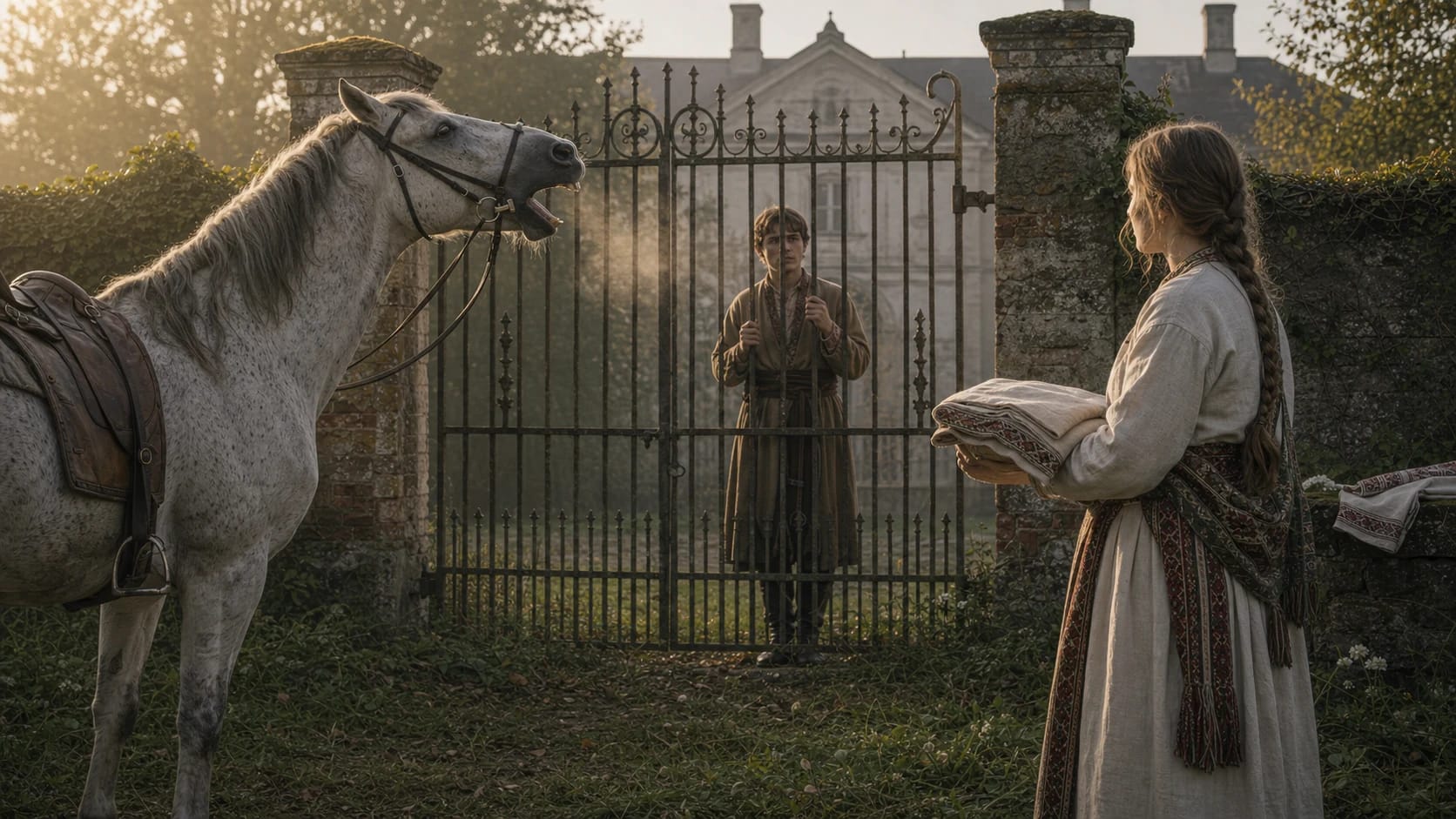
The Grey Horse Neighed at the Manor: song interpretation
The horse's neighing is a signal of unrest. It announces the young man's captivity and turns the manor into a public place of waiting. The parents and sister do not want to lose property, so their love is shown as limited.
The young woman's answer changes the tone: she agrees to sell her linen cloths. Linen is a sign of women's work and dowry, so her sacrifice is especially meaningful. Rescue comes through the value of love and labor.
A second interpretive layer is also possible. The repeated chain of "redeem me from captivity" can be read as an older ransom-from-captivity motif containing the image of a captive's literal ransom. In that case, the parents' and sister's refusal to sacrifice property and the beloved's willingness to pay are not only an emotional hierarchy, but a literal ransom that the song has taken over and adapted to a love and wedding-choice plot.
The Grey Horse Neighed at the Manor: symbols and phrases
- Grey horse
- A pale grey horse, sign of a young man's status and path. Its neighing announces trouble.
- Manor
- A public, social space where the drama of captivity and rescue appears.
- Pale oxen and dappled cows
- Family property that relatives do not want to sacrifice.
- Fine linen cloths
- A sign of the young woman's work and dowry. Selling them shows her resolve to rescue him.
The Grey Horse Neighed at the Manor: song history
This Dainava variant is close in structure to "Plūkavo antelė an marių," except that the water bird is replaced by a grey horse at the manor. The song was recorded from the Subartonys area, where Krėvė's collection contains many texts about captivity, rescue, and family dialogue.
In folk songs, the horse is often a sign of a young man's path and status, but here the horse no longer frees him by itself. It neighs at the manor, while the human being waits to see who will be willing to sacrifice property.
The Grey Horse Neighed at the Manor: sources
The Grey Horse Neighed at the Manor: frequently asked questions
What does šyvas mean?
Šyvas means a pale grey or whitish shade of horse. In folk songs, such a color often sets the horse apart.
Why does the horse neigh by the manor?
The neighing acts as a sign of alarm and news. It announces the young person's captivity.
Is this song connected with captivity?
Yes. The text repeatedly says that the son, brother, or beloved is in nevalia, captivity or bondage.
Why do the relatives refuse to sell property?
The repetition highlights the price of rescue. The parents' and sister's answers show that their concern is limited by the value of property.
Why does the young woman agree?
She embodies the resolve of love. Selling her linen cloths is a personal and costly sacrifice.
How does this song differ from "Plūkavo antelė an marių"?
Both have a rescue structure, but one begins with a water bird and a young woman's captivity, while this one begins with a horse and a young man's captivity.