
The Duck Floated on the Lagoon lyrics and meaning
Plūkavo antelė an marių,
Verkė jauna dukrelė nevalioj:
Vaduok mane, motula, vaduoke,
Nor margąsias karvelas parduoke.
Veliai tave, dukrela, nematyč,
Nei ką margos karvelės patrocyč.
Plūkavo antelė an marių,
Verkė jauna dukrelė nevalioj:
Vaduok mane, tėvuli, vaduoke,
Nor ir palšus jautelius parduoke.
Veliai tave, dukrela, nematyč,
Nei ką palši jauteliai patrocyč.
Plūkavo antelė an marių,
Verkė jauna sesutė nevalioj:
Vaduok mane, brolali, vaduoke,
Nor ir šyvus žirgelius parduoke.
Veliai tave, sesula, nematyč,
Nei ką šyvi žirgeliai patrocyč.
Plūkavo antelė an marių,
Verkė jauna mergelė nevalioj:
Vaduok mane, berneli, vaduoke,
Nor ir savo dvarelius parduoke.
Aš savo dvarelius parduosiu,
Tave, mergele, išvaduosiu,
Žaliųjų vainikėlį išpirksiu
Ir tave, mergele, paimsiu.
View illustration
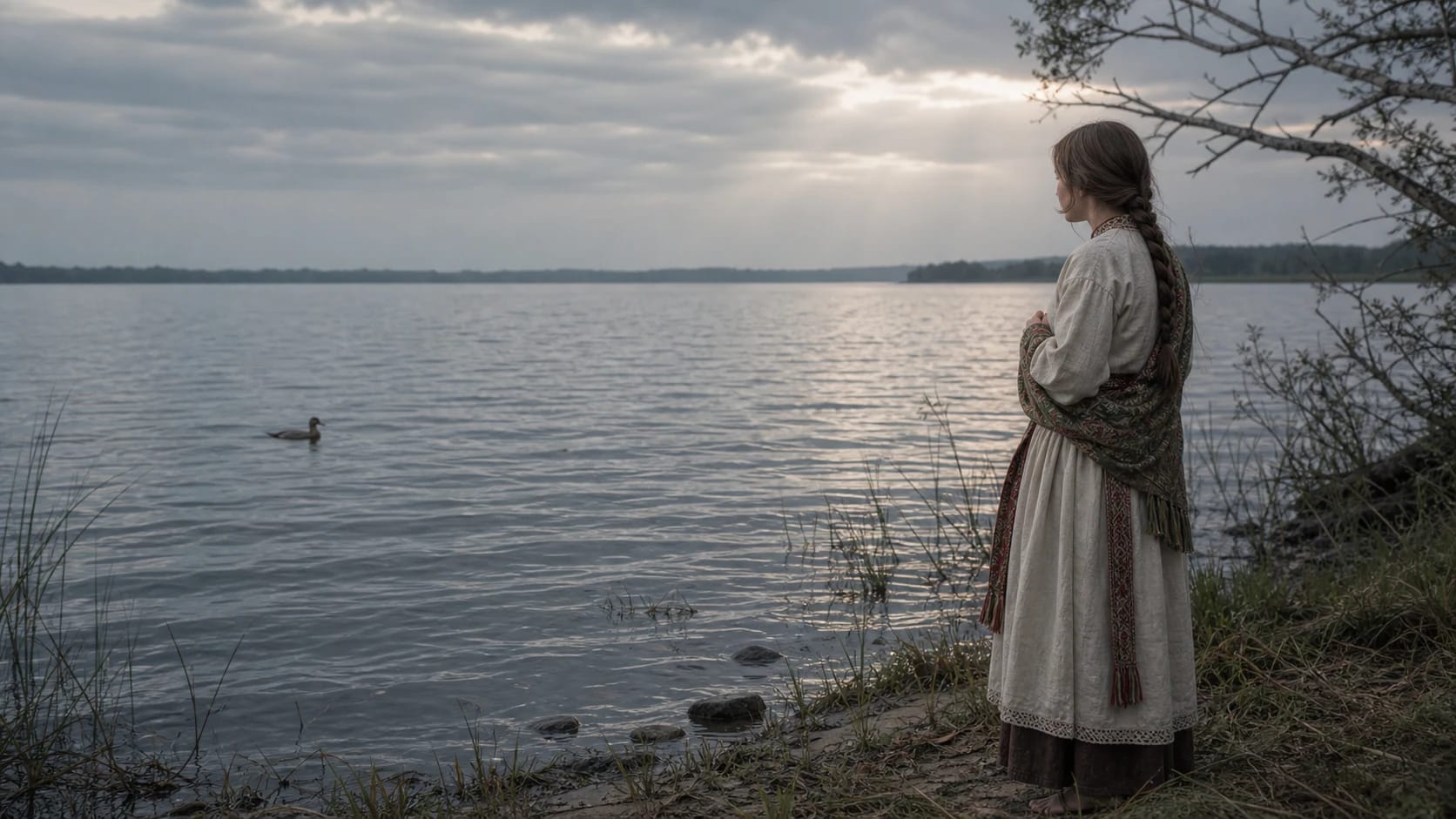
The Duck Floated on the Lagoon: song interpretation
The duck on the lagoon is a liminal figure: it floats between shores, just as the girl is between her own people and captivity. Each relative counts the price and refuses to sacrifice property.
The young man's answer changes the direction of the song. He is prepared to sell his estates, redeem the wreath, and take the girl. In this way the bond of love is shown as stronger than the family's protection of property.
A second interpretation is also possible. The formula "redeem me from captivity" may preserve an older ransom-from-captivity layer, reflecting the image of buying back a captive or enslaved person. Under this reading, the relatives' refusal to sacrifice property and the young man's willingness to pay are not only a lyric metaphor of love, but a literal ransom motif later adapted to the wedding logic of redeeming the wreath.
The Duck Floated on the Lagoon: symbols and phrases
- Duck on the lagoon
- A water bird showing a state of floating between shores and uncertainty.
- Nevalia
- Captivity, bondage, or a harsh state of dependence from which the girl asks to be released.
- Cows, oxen, horses
- Measures of family wealth through which each relative's willingness to sacrifice is tested.
- Green wreath
- A sign of the girl's honor and of marital redemption.
The Duck Floated on the Lagoon: song history
This Dainava-region variant is a dramatic song of captivity and rescue. It begins with the image of a water bird, and then repeats a chain of pleas: the daughter, sister, or girl appeals to family members, but only the young man promises redemption.
The dialectal "an marių" and "plūkavo" preserve the color of southern Lithuanian singing. Similar motifs of water and captivity recur in the Dainava collection, including variants with the image of a horse.
The Duck Floated on the Lagoon: sources
The Duck Floated on the Lagoon: frequently asked questions
What does "plūkavo" mean?
It is a dialect form meaning floated or drifted, fitting the duck's movement on the water.
Why are relatives asked to sell animals?
The animals and estates show the price of rescue. Each reply tests who is willing to make a sacrifice.
Why is the young man the only one who agrees?
The song's logic elevates the bond of love: the young man is willing to sacrifice more than the family members.
What does "nevalioj" mean?
It means being in captivity, dependence, or great hardship. The girl asks to be rescued from that state.
Why are the lagoon waters mentioned?
The lagoon gives the scene distance and a sense of boundary, strengthening the image of captivity.
Is this a Dainava-region song?
Yes. This variant is recorded in the Dainava regional collection and preserves traces of Dzūkian forms.