
Puikoratis, the Proud Rider lyrics and meaning
Aš turėjau mažą brolį,
Bet didelį puikoratį.
Jis turėjo bėrą žirgą
Aukso patkavatėms.
Kai jis jojo per pievatę,
Pievužė linkėjo.
Jis užmynė dobilatį,
Dobilatis suteškėjo.
Kai jis jojo per laukatį,
Laukužis bildėjo.
Kai jis jojo per šilatį,
Šilužis skambėjo.
Jis užmynė šile šiekštą,
Kad žievulėlė lėkė.
Jis sutiko mergužatę,
Baltą lelijatę.
Jis jai davė labą rytą,
Ji jam nei žodatį.
Jis jai kėlė kepuratę,
Ji jam vainikatį.
View illustration
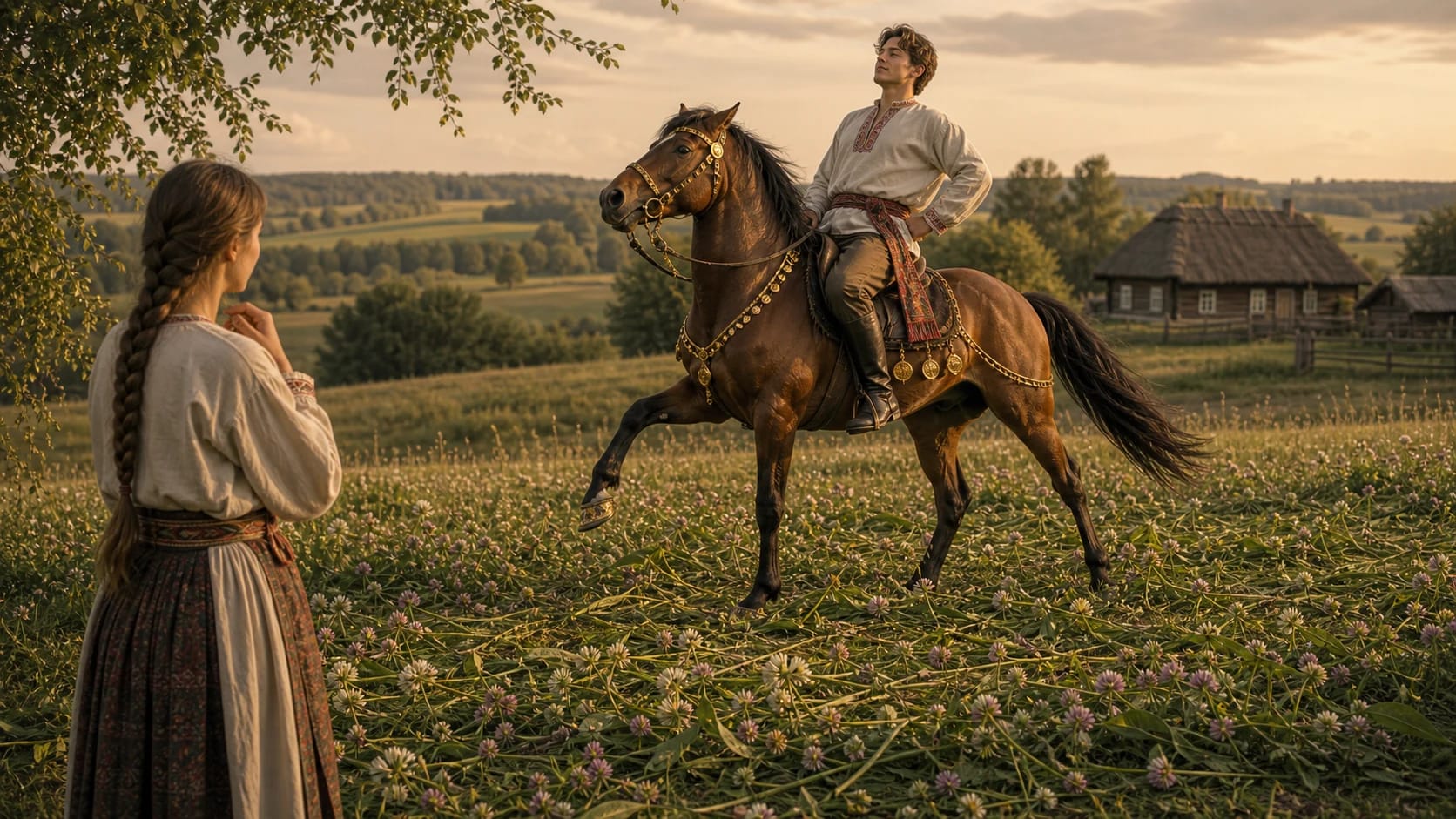
Puikoratis, the Proud Rider: song interpretation
Puikoratis is a young man whose self-image is larger than his real stature. The song says the brother is small, but his pride is great. His riding leaves sound and damage: the clover is crushed, the woodland rings, and bark flies.
The young woman's response is restrained. He greets her and raises his cap, but she answers not with a word, only with the sign of her wreath. Thus the song keeps its ambiguity: pride attracts attention, but does not necessarily win true closeness.
Puikoratis, the Proud Rider: symbols and phrases
- Puikoratis
- A proud young man whose posture is the target of the song's satire.
- Bay horse
- A means of status and display. Through it the young man shows himself off.
- Clover
- A tender meadow detail trampled by the proud rider. It shows his rough effect on the surroundings.
- Cap and wreath
- Signs of social greeting and flirtation. They allow courtesy and attraction to be shown without direct dialogue.
Puikoratis, the Proud Rider: song history
In Rėza's comments, "Puikoratis" is explained as a song about a proud, self-displaying young man. The word is not part of ordinary modern speech, so it is harder to find in modern searches than more familiar incipits. Even so, Rėza's text and comments clearly attest the song.
The song shows the young man through his ride: the horse, meadow, field, woodland, and young woman become a stage on which pride is displayed. The sounds and reactions of the surroundings exaggerate his performance, giving the text a satirical shade.
Puikoratis, the Proud Rider: sources
Puikoratis, the Proud Rider: frequently asked questions
What does "Puikoratis" mean?
In Rėza's context it means a proud or boastful young man. The word is rare today, so the title sounds unusual.
Is this a dance song?
The source presents it as a lyrical Rėza song, not as a confirmed round-dance or dance text. The title's resemblance to "ratelis" should not mislead.
Why does the environment react so loudly to the ride?
It is satirical exaggeration. The rider is so proud and noisy that meadow, field, and woodland seem to announce him.
What are "patkavatės"?
They are horseshoes or details of shoeing the horse. Golden ones emphasize an ornate, exaggeratedly splendid horse.
Why does the maiden not answer in words?
Her silence preserves the irony. The proud man displays himself, but it is unclear whether his performance truly convinces her.
Why does the page rely on Rėza?
The direct modern record trail is weak, while Rėza's edition provides a clear text, number, and commentary.