
O Bird Cherry Tree lyrics and meaning
Oi tu ieva,
Ievuže, ievuže,
Kodėl nežydi
Žiemužėj?
Ką žydėsiu
Žiemužėj, žiemužėj?
Šalnužė šalo
Žiedužius.
Šalna šalo
Žiedužius, žiedužius,
Vėtružė laužė
Šakužes.
Vėtra laužė
Šakužes, šakužes,
Šermuonėlis graužė
Šaknužes.
View illustration
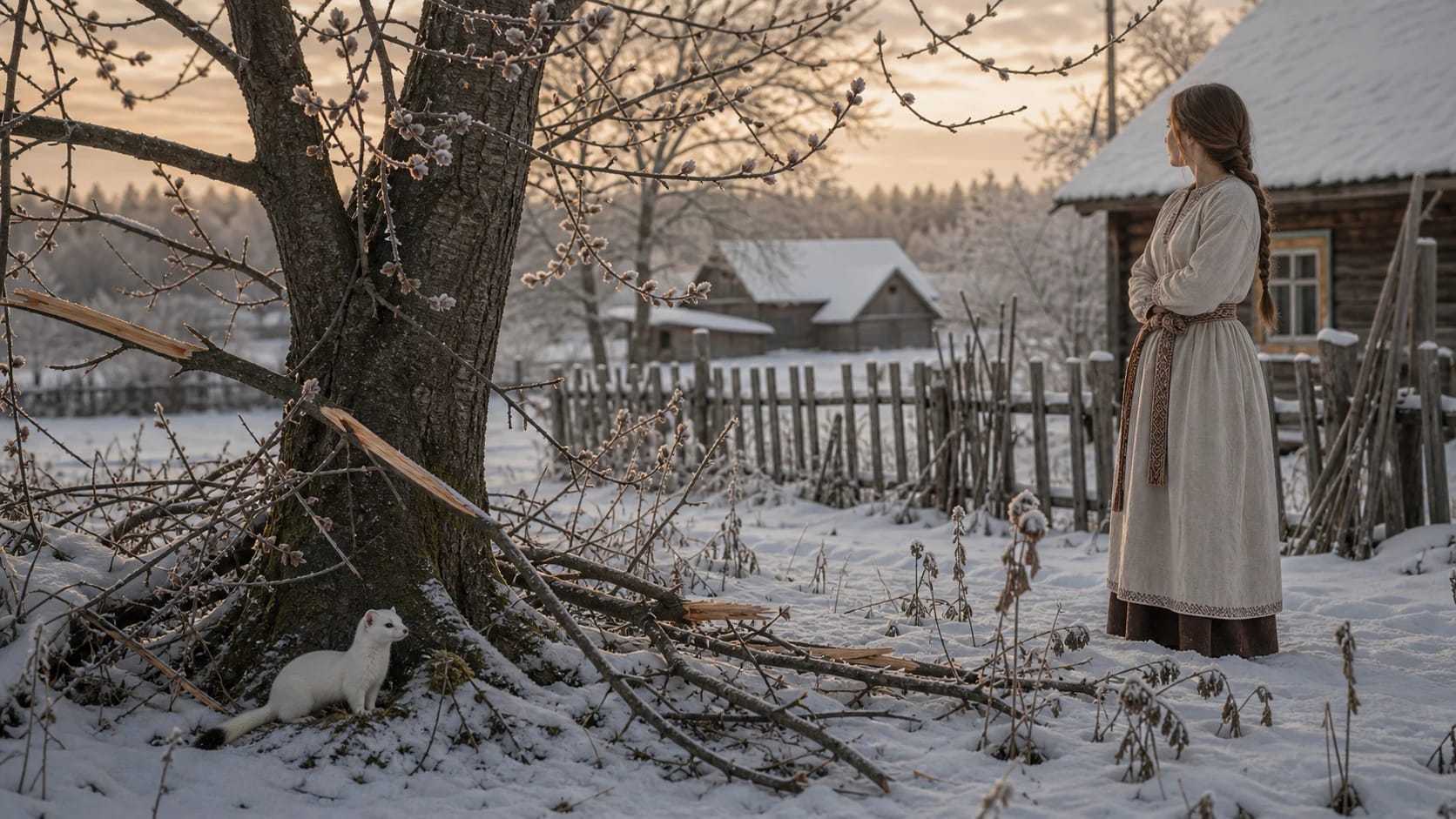
O Bird Cherry Tree: song interpretation
The bird cherry tree is usually associated with spring, fragrance, and white blossom, so the question about blooming in winter is deliberately impossible. The song speaks about timing: even the most beautiful tree cannot flower when frost freezes the blossoms and wind breaks the branches.
Through the tree, one can also read a human state. Youth, love, or joy needs the proper time. If frost and storm arrive, blooming is delayed or destroyed.
O Bird Cherry Tree: symbols and phrases
- Bird cherry tree
- A tree of spring, fragrant blossom, and maidenly tenderness.
- Little winter
- The wrong time for flowering. It shows stillness and impossibility.
- Frost
- A force that damages blossoms. It may mean early loss or untimely pain.
- Stoat
- A small natural actor whose gnawing at the roots extends the image of damage to the tree.
O Bird Cherry Tree: song history
"O Bird Cherry Tree" has a strong trace in sound and musical tradition. In LLTI records it is documented as living singing, while later arrangements show that the bird cherry became a recognizable symbol of spring and maidenhood.
In Juška's variant the song is short and concentrated: the tree is asked why it does not bloom in winter, and the answer comes through frost, wind, and the stoat. It is nature's language about the impossibility of flowering at the wrong time.
O Bird Cherry Tree: sources
O Bird Cherry Tree: frequently asked questions
What is ieva?
Ieva is the bird cherry tree, a fragrant flowering tree. In Lithuanian songs it is often associated with spring and youth.
Why ask why the bird cherry does not bloom in winter?
It is a poetic question about the wrong time. Winter contradicts the bird cherry's blooming.
What does "ievuže" mean?
It is a diminutive, affectionate address. It makes the tree close, almost like a living conversation partner.
Does the song have sound recordings?
Yes. LLTI and ePaveldas sources testify to both field recordings and later musical versions.
Why is the stoat mentioned?
It intensifies the image of damage: not only frost and storm, but also an animal gnawing the roots, prevents blooming.
Can the song be about a person?
Yes. As in many folk songs, the state of a tree can reflect human youth, love, or vulnerability.