
- Genre
- Animal tale
- Source status
- international tale type
- Motifs
- wolf's deception, mother's warning, voice, threshold of the home, children's safety
The Wolf and the Kids, The Wolf and the Seven Kids
The tale
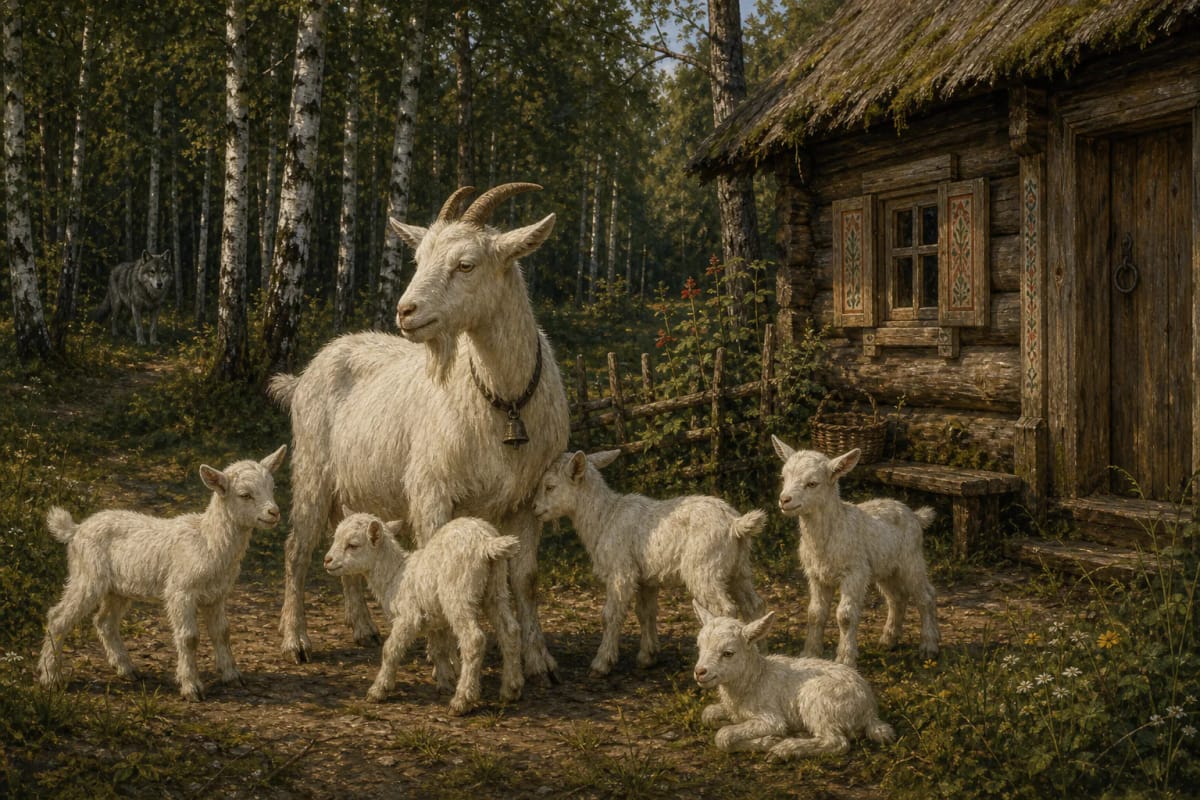
The mother goat leaves home and warns the kids not to open the door to anyone. The wolf comes and tries to pretend to be the mother, but his voice, paws, or other signs reveal the deception.
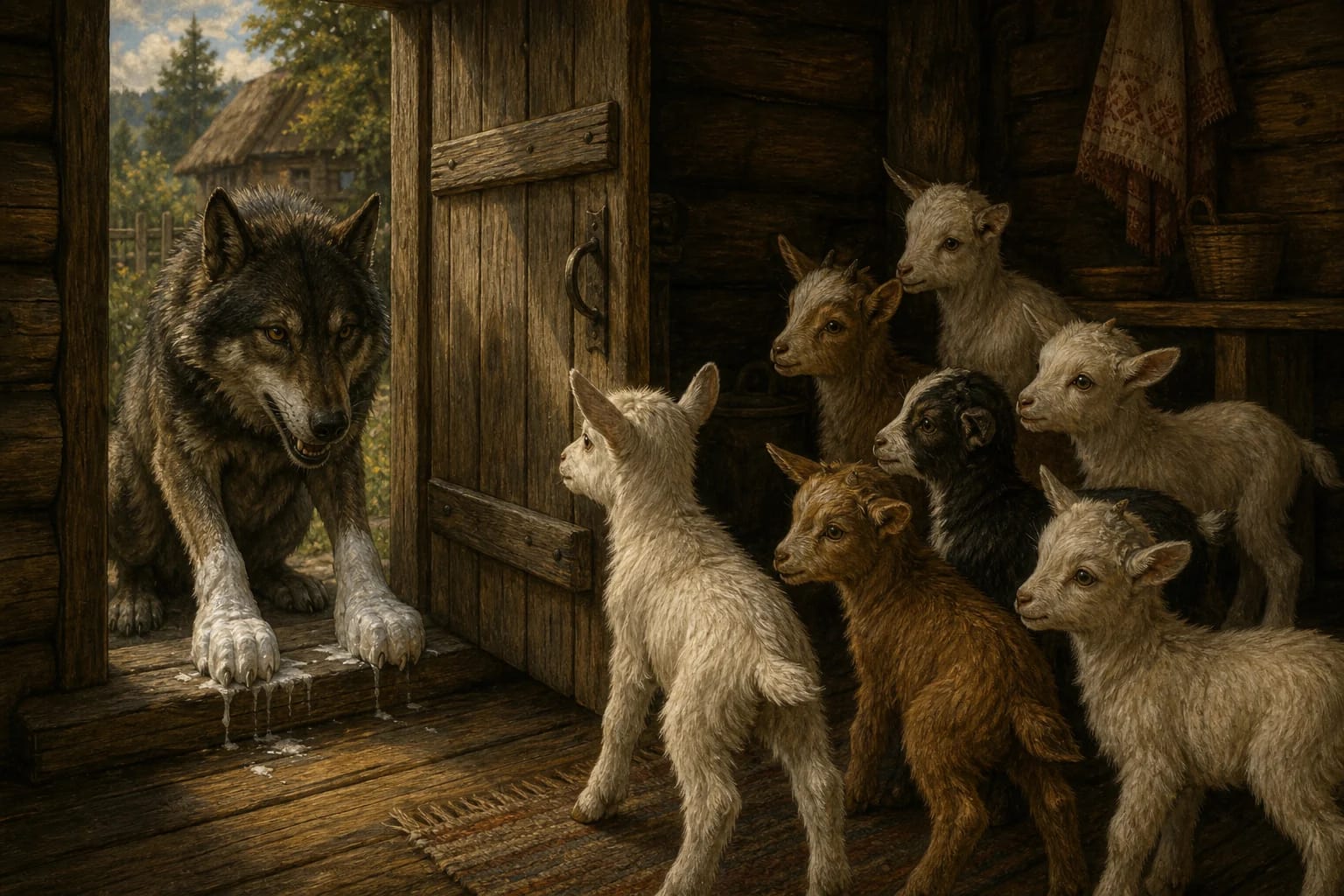
The wolf changes his voice, whitens his paws, or otherwise adapts himself to the sign the children expect. At last the kids believe him and let him into the house.
The mother returns, finds the disaster, and begins rescuing the children. The tale ends with the wolf's deceit exposed and the safety of the home restored.
Interpretation
The tale speaks clearly about the threshold and recognition. Children must not only obey a prohibition but also understand that danger can imitate a familiar voice.
The wolf is a predator, but his most dangerous trait here is deception. He tries to alter external signs so that he resembles the mother.
The mother's return restores order. The tale makes it possible to speak about children's safety without direct sermonizing.
History and variants
The plot of the wolf and the kids is widely known in international tradition, but Lithuanian tellings combine it with local animal-tale language and images of the home and threshold.
Variants change the number of kids, the signs of recognition, and the details of punishment. There is no single date of creation.
In the international Aarne-Thompson-Uther system, this is ATU 123, "The Wolf and the Kids"; its most famous parallel is the Brothers Grimm "The Wolf and the Seven Young Goats" (KHM 5). It is one of the oldest animal tales. According to Visuotinė Lietuvių enciklopedija, about 2,500 Lithuanian variants of animal tales have been recorded, representing about 100 plot types, and their classification appears in the catalogues of Jonas Balys (1936) and Bronislava Kerbelytė (1999-2002).
Why this is an important animal tale
It covers a very clear search field and helps explain one of the most universal children's-tale themes: not everyone who speaks in a familiar voice is safe.