
- Genre
- Wonder tale
- Source status
- international tale type
- Motifs
- swan woman, hidden identity, forbidden act, marriage, loss
The Swan, the King's Wife, The Swan Queen, Gulbė karaliaus pati
The tale
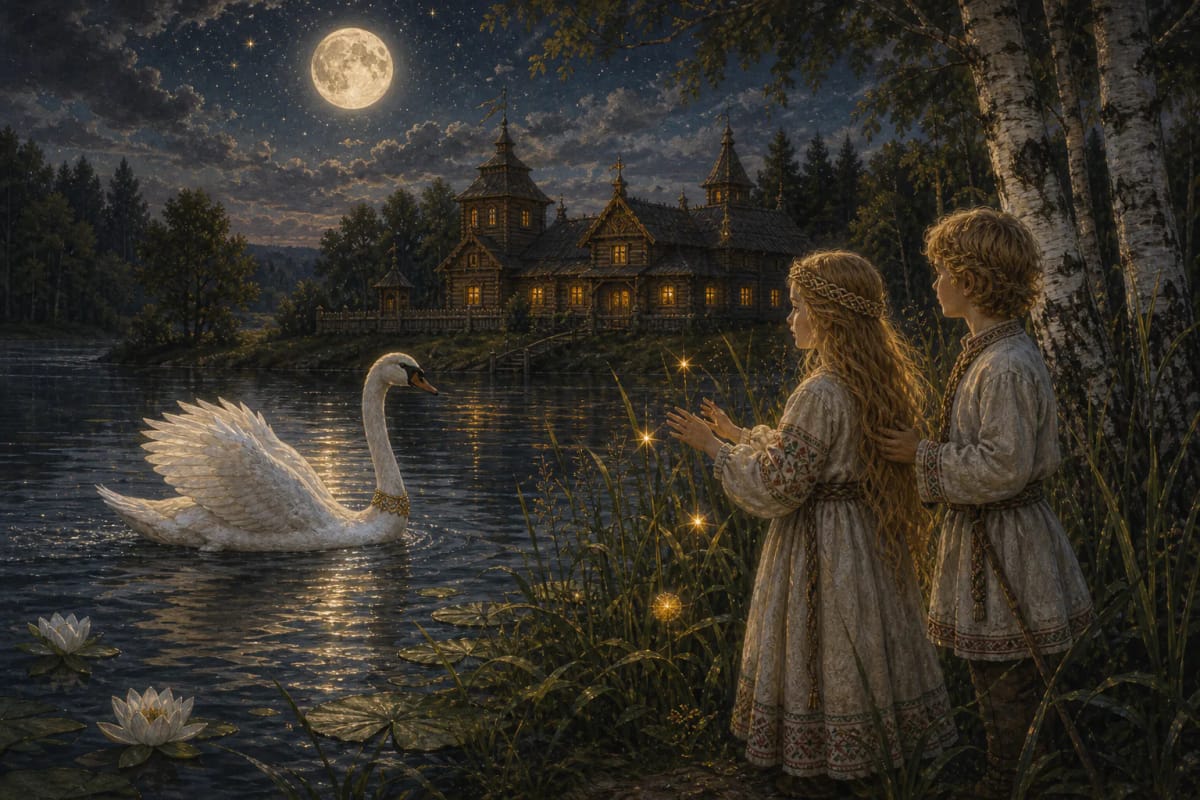
A king or prince sees a swan descend to the water and cast off its bird form. Before him appears a beautiful woman. He marries her or takes her swan garment so that she can no longer fly away.
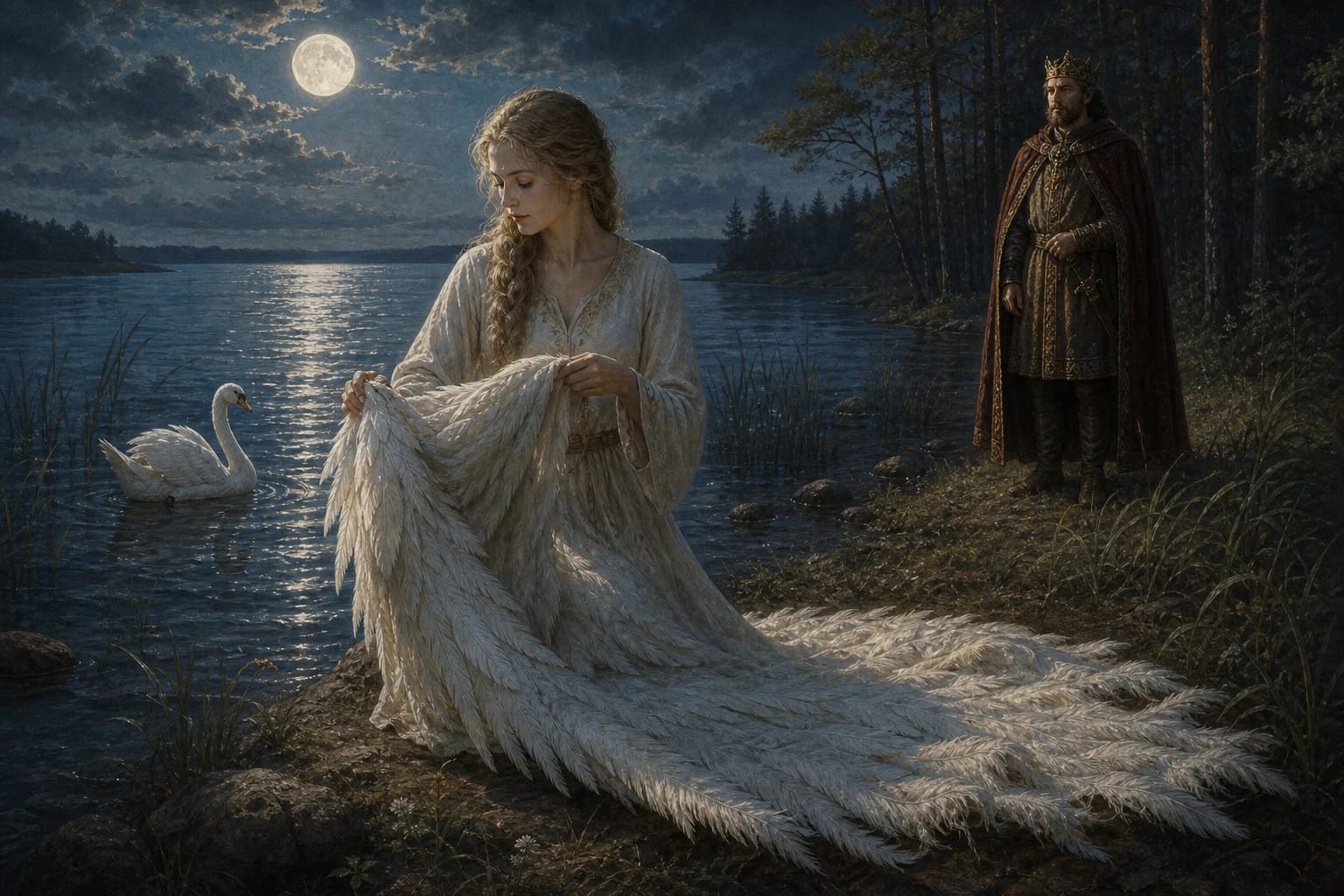
The woman lives at court as the king's wife, but her origin remains bound to water and bird form. She may bear children, keep the household, and be a good wife, yet her true freedom depends on a hidden feather garment or on a promise.
When the prohibition is broken or the hidden swan sign is found, the woman becomes a swan again and flies away. In some variants the husband sets out to seek her, and the tale becomes a long journey into another world.
Interpretation
The swan in this tale signifies beauty, liminal nature, and independence. She can live in a human household, but she is not simply a courtly woman: her origin in water and the bird world continually recalls another order.
The tale raises a question of trust. If a marriage is based on deception, a stolen garment, or concealed truth, it remains fragile. Happiness depends not only on love but also on the ability to respect the boundaries of another world.
For readers, this tale is close to the themes of Eglė, Queen of Serpents: a human marries a liminal being, and the relationship is destroyed by possession, curiosity, or the breaking of a promise.
History and variants
The swan-maiden plot is known in many European and Asian traditions. In Lithuanian tales it adapts to local images of water, birds, and family.
It is one of the oldest and most widespread motifs in the world: the bird or swan maiden whose feather garment is stolen, forcing her to remain as a wife, and who flies away once she recovers it. In the Aarne-Thompson-Uther system this plot is connected with ATU 400, "The Man on a Quest for His Lost Wife," and with the bird-wife or swan-maiden motif known from India to Scandinavia. Lithuanian variants are described in Bronislava Kerbelytė's catalogue of narrative folklore (1999-2002).
There is no single date of creation. The important pattern to watch is how the main scheme changes: swan form, hiding the garment, marriage, prohibition, and the woman's return to her own world.
Cultural meaning
The swan-woman plot joins motifs of water, bird, marriage, and lost freedom. It is therefore close to other tales about supernatural spouses and the boundary between the human world and another world.