
- Genre
- Wonder and family tale
- Source status
- traditional folklore
- Motifs
- orphan girl, stepmother, injustice, hidden help, recognition
Sigutė
The tale
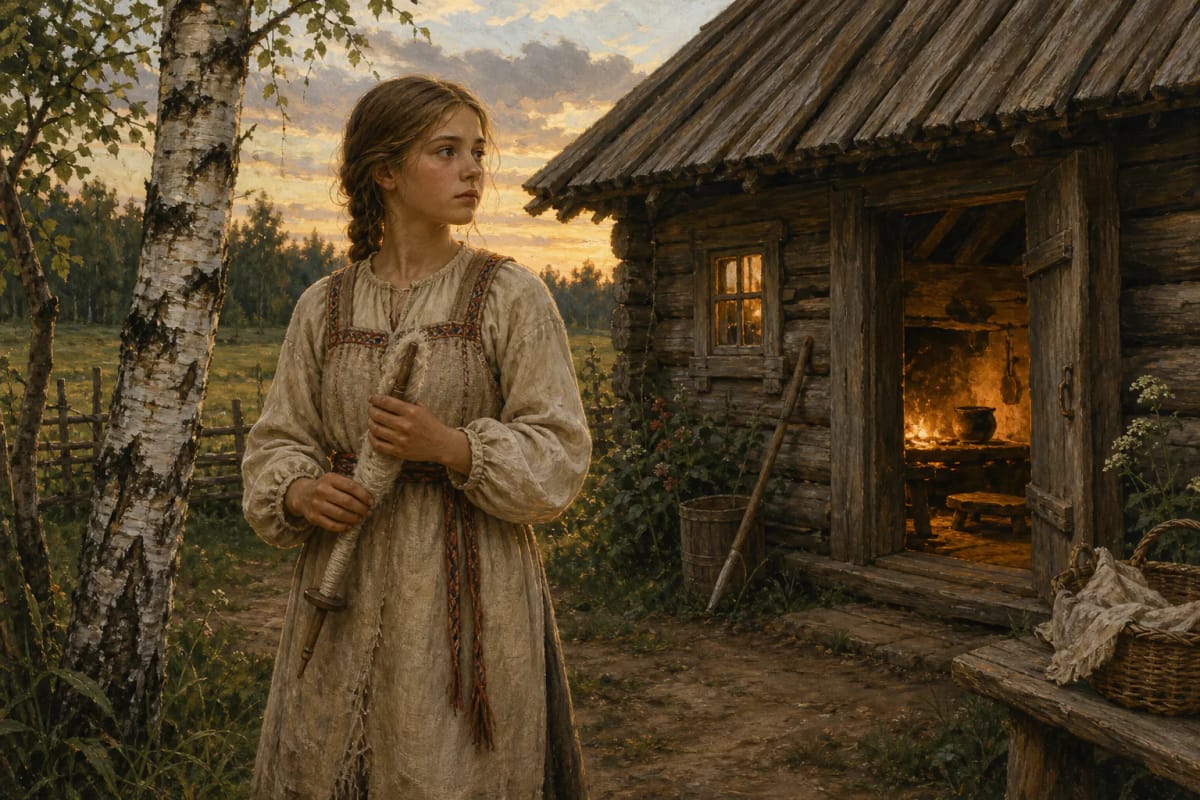
Sigutė lived with a stepmother who did not love her and gave her the hardest work. The stepmother's daughter was spoiled, while the orphan had to work, remain silent, and endure injustice. In many variants, the girl is helped by the memory of her dead mother, an animal, a tree, or a miraculous power.
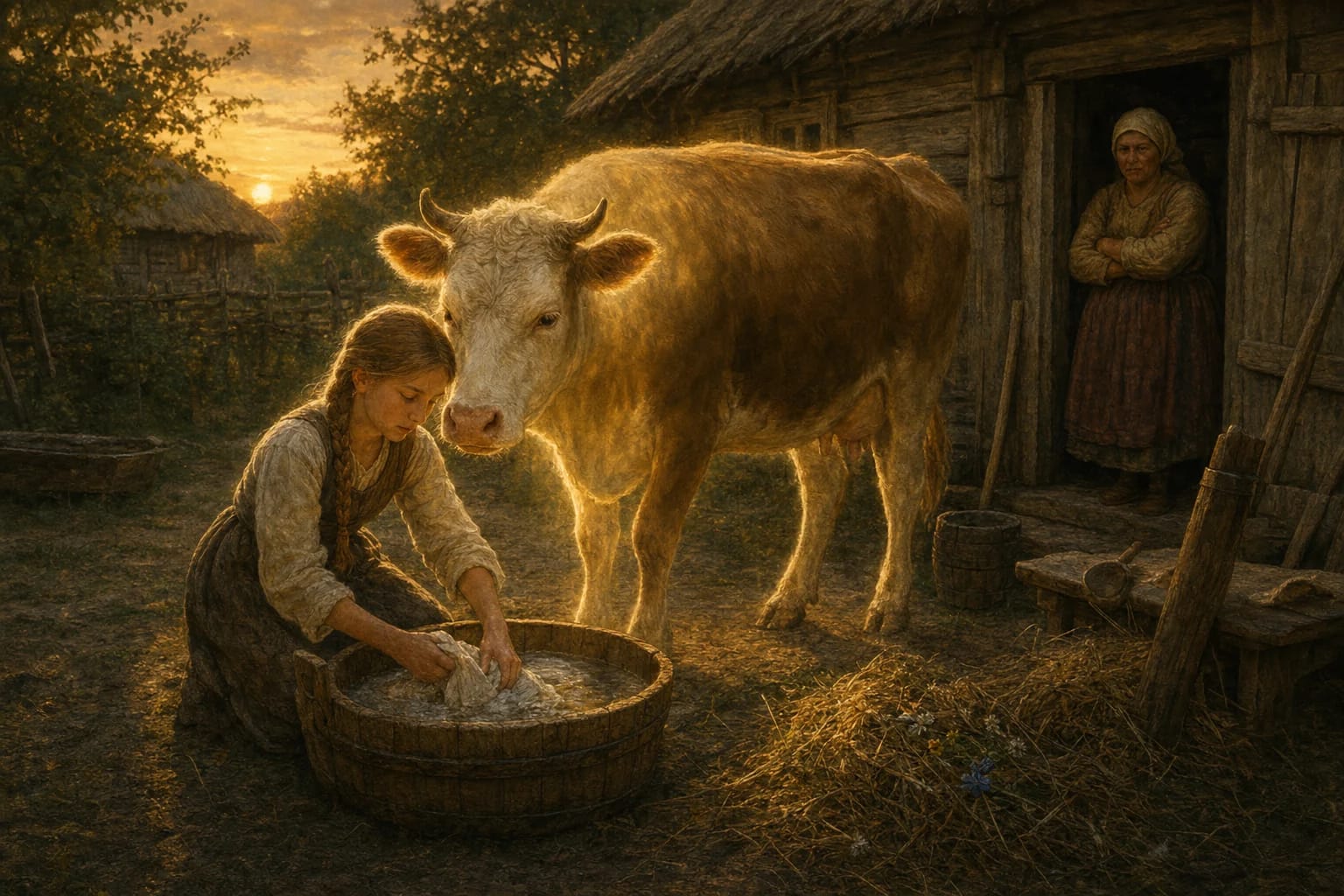
When the stepmother invents a new trial, Sigutė overcomes it not by scheming against others but by remaining diligent and good. She receives help because she does not abandon humanity even when she is treated cruelly.
In the ending the injustice is revealed. Sigutė is recognized as the truly worthy girl, while the stepmother's lies and envy turn back against her. The happy resolution restores the violated moral order.
Interpretation
Sigutė belongs to the large field of orphan tales. In folklore the orphan is often a person without social protection, so her virtues must be tested through work, patience, and the ability to remain good.
The stepmother takes the role of unjust domestic authority. She rules the household, but her rule does not create justice. The tale therefore lets both child and adult readers see clearly that household power is not the same as moral truth.
Sigutė's victory is not only personal success. It is the setting right of the world: the just girl receives a name, place, and future, while falsehood loses power.
History and variants
There is no single date of creation for Sigutė. It is a folk tale transmitted orally and recorded in variants, so different texts may change the helper, the form of punishment, and the ending.
Sigutė's type is close to international orphan-and-stepmother tales, yet Lithuanian texts emphasize village household life, work, and the memory of the dead mother.
Sigutė lives in Lithuanian folklore in two directions. In variants where the orphan is helped by the dead mother's cow or by a miraculous power and the ending is happy, the plot is close to the international Cinderella cycle, ATU 510-511, including "One-Eye, Two-Eyes, and Three-Eyes." In tragic variants, where the stepmother kills the orphan and the truth is revealed through a tree or bird that grows from her remains, Sigutė is linked with ATU 720, "My Mother Slew Me" (the Brothers Grimm "The Juniper Tree"). Lithuanian variants are classified in Bronislava Kerbelytė's catalogue of narrative folklore (1999-2002).
What is worth noticing
This tale connects well with the orphanhood theme in Lithuanian folk songs. In songs the orphan often speaks in a sorrowful voice, while in the tale the same pain becomes a plot in which justice is finally recognized.