
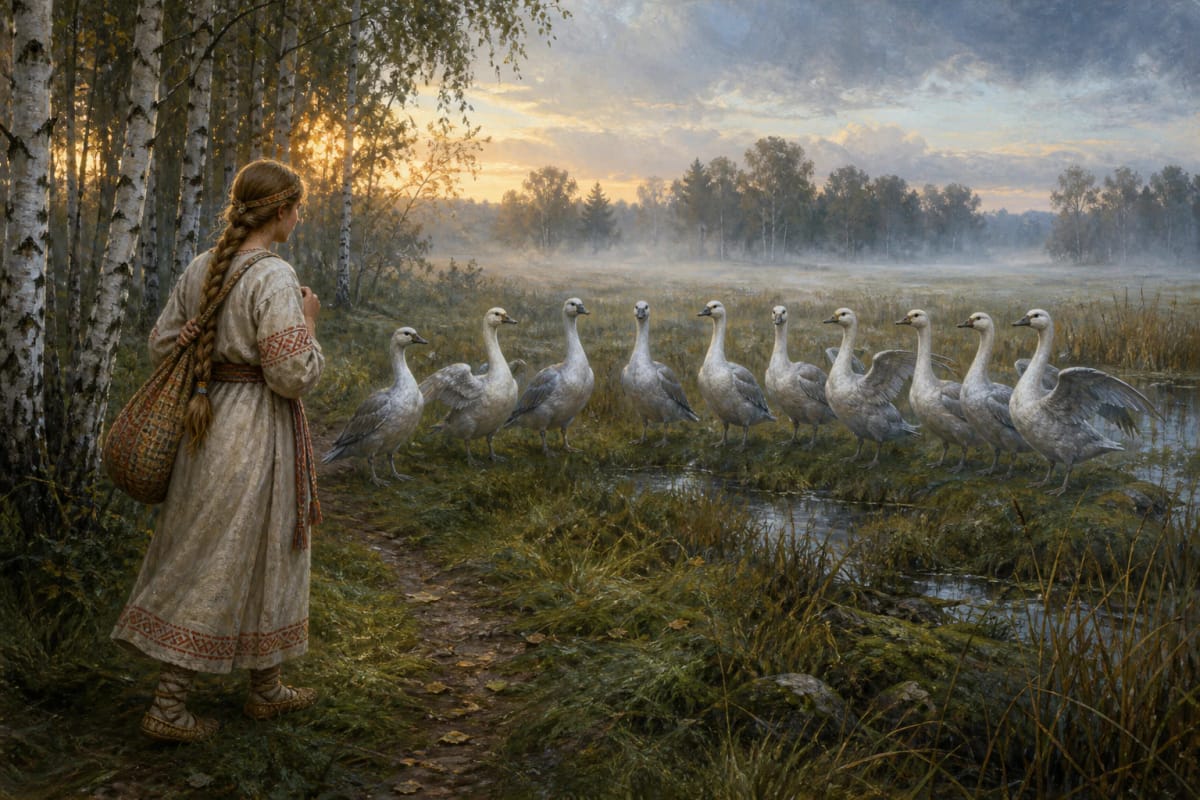
- Genre
- Wonder tale
- Source status
- traditional folklore
- Motifs
- sister and brothers, enchantment, journey, recognition, restoration of family
Nine Brothers and Their Sister Elenytė, Elenytė and the Nine Brothers
The tale
Elenytė grows up in a family where her brothers are her most important support. Because of a curse, ill will, or a wrongful decision, the brothers disappear or enter another state of being, and the sister is left alone with the task of finding them.
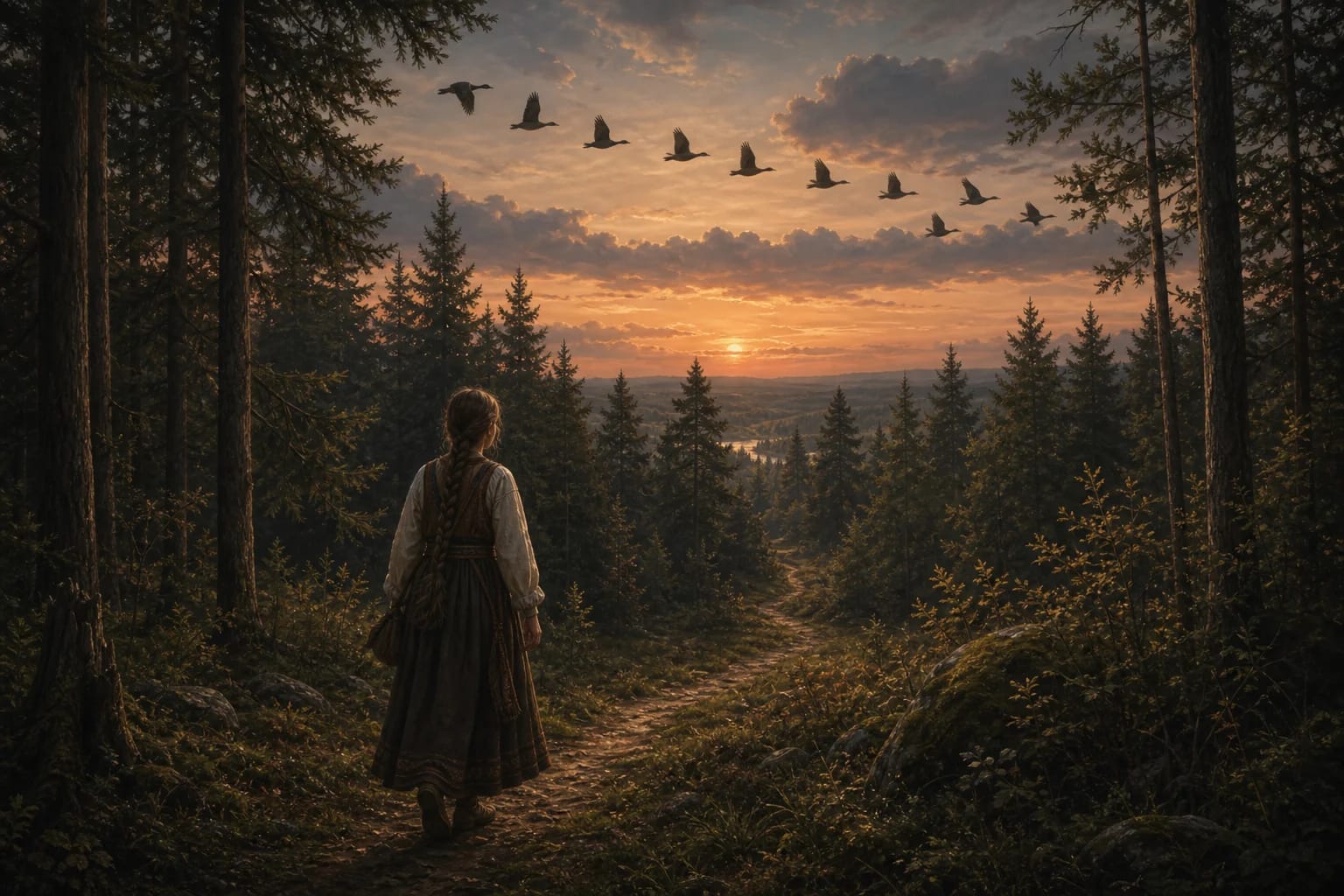
She travels through forests, strange houses, and dangerous places. Along the way she meets helpers, but her real strength is loyalty to her brothers. When she must choose between safety and family, Elenytė chooses the harder road.
In the ending, the brothers are recognized or freed. The tale restores the family to order, but the journey leaves its mark: the sister is no longer merely the youngest member of the household; she becomes the one who saved the kin group.
Interpretation
Elenytė's tale is close to plots about bird-brothers and the sister as rescuer. Its central value is not force but the ethics of loyalty: the sister does not abandon her brothers even when they are no longer beside her.
The number nine marks a large kin group. When such a family disappears, the whole world of the home collapses, so the sister's journey becomes not a private adventure but a restoration of family.
Elenytė is often read as an active girl or young woman. She does not wait to be saved; she goes out to search, asks questions, works, and takes risks.
History and variants
There is no exact date of creation. The tale belongs to a variant oral tradition, so its texts may be close to other plots about enchanted brothers and a sister who frees them.
The key task in studying this plot is to distinguish stable motifs from changing details: the number of brothers, their state, the places of the journey, and the helpers.
Connection with brother-and-sister plots
Elenytė's story belongs to the broader field of enchanted-brother and rescuing-sister plots. It is close to the tale of the twelve brothers flying as ravens, but it keeps its own emphasis on names, number, and the restoration of family.
In the international tale-type system, this is a Lithuanian variant of ATU 451, "The Maiden Who Seeks Her Brothers"; compare the Brothers Grimm tales "The Six Swans" and "The Twelve Brothers." The number of brothers, whether nine, twelve, or seven, and their bird form may vary, but the core of the sister's search, loyalty, and rescue remains. Lithuanian variants are classified in the catalogues of Jonas Balys (1936) and Bronislava Kerbelytė (1999-2002).