
- Genre
- Wonder and family tale
- Source status
- variant tradition
- Motifs
- brother and sister, journey, dangerous home, loyalty, return
Jurgiukas and Elenytė, Jurgiukas ir Elenytė
The tale
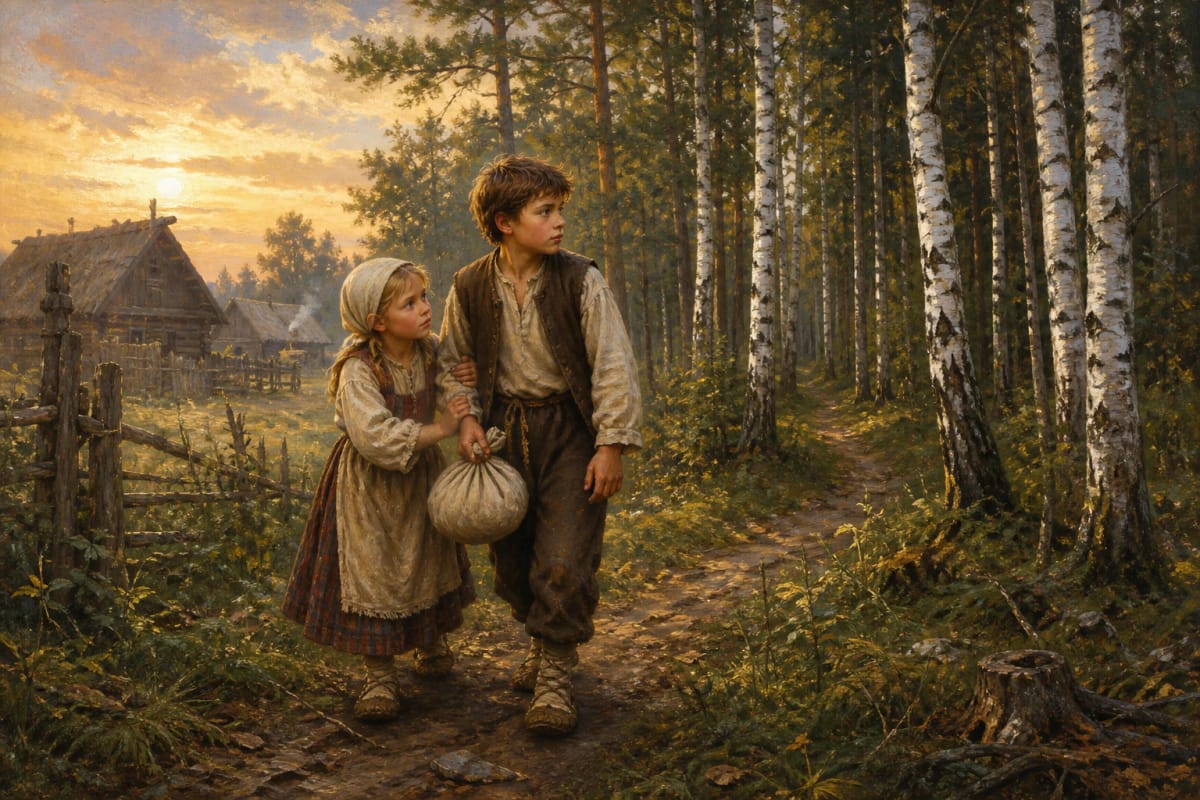
Jurgiukas and Elenytė find themselves in a situation where home is no longer safe. The children must leave, hide, or travel through the forest because the adult world does not protect them. Brother and sister have only their trust in one another.
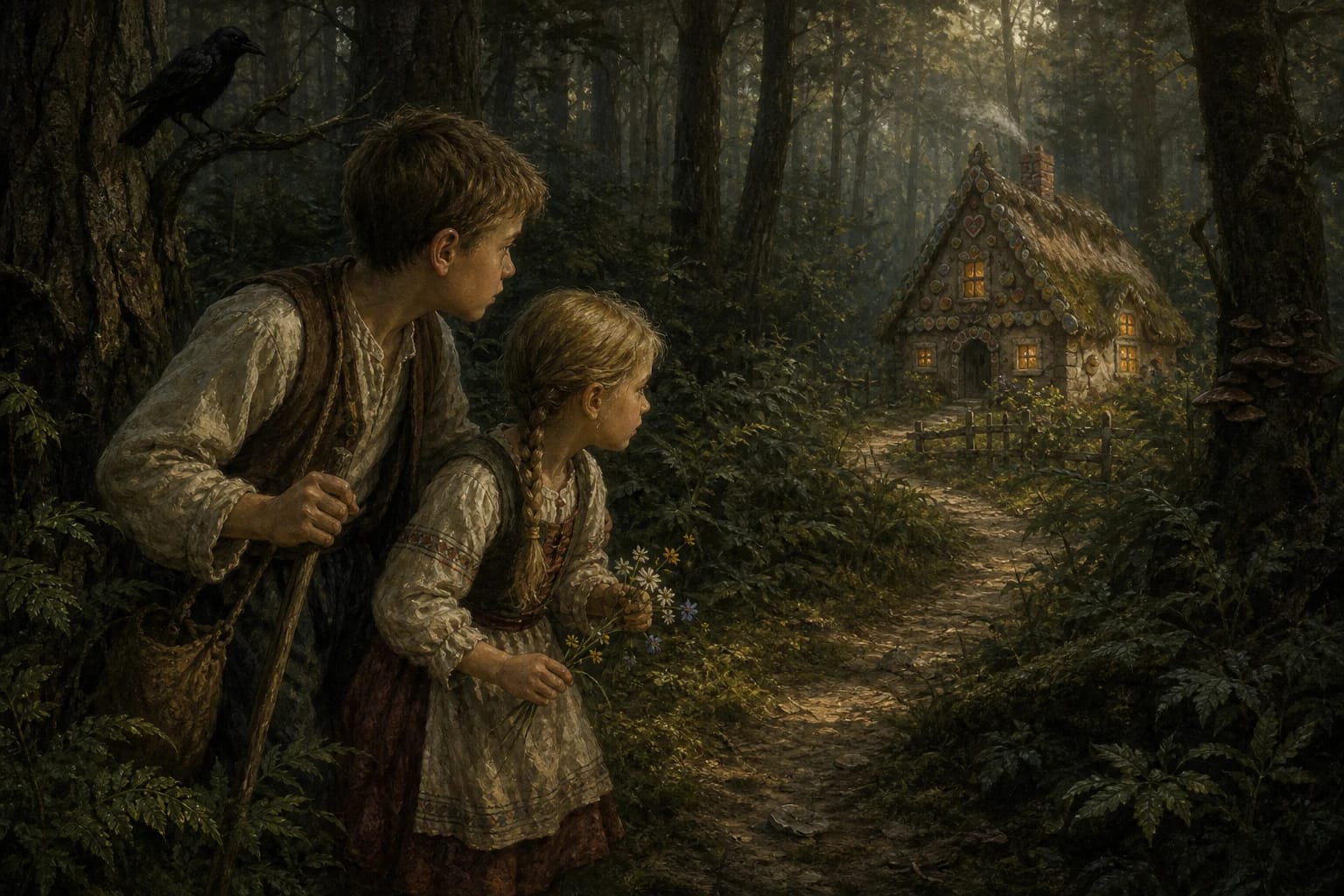
On the journey they are tempted by convenient but dangerous things: strange houses, false promises, food or water that can change fate. One child may warn the other, and a mistake creates a new trial.
The tale ends in escape or recognition. The children return to the human world with the experience that the weakest can survive if they stay together and do not yield to the first deception.
Interpretation
The plot of Jurgiukas and Elenytė is close to survival tales about brothers and sisters. Here the child is not a passive listener: the child must decide whom to trust, when to flee, and how to protect another.
The forest works as a space of the unknown. It is dangerous, but it also allows the children to learn how to distinguish deception from help.
The tale can be read as a story of safety and independence. It teaches not by preaching, but by showing what happens when the order of home collapses.
History and variants
There is no single date of creation. The tale lived in variants, and close motifs appear in the wider European tradition of children abandoned in or fleeing into the forest.
The plot of children escaping from dangerous, often witch- or ogre-like, houses in the forest belongs in the international Aarne-Thompson-Uther system to the ATU 327 group, "The Children and the Ogre"; the best-known parallel is the Brothers Grimm "Hansel and Gretel" (KHM 15). Lithuanian variants adapt the children's names and village setting in their own way; they are described in Bronislava Kerbelytė's catalogue of narrative folklore (1999-2002).
In Lithuanian versions the names Jurgiukas and Elenytė, the village-household setting, and the bond between the children are especially important.
The names Jurgiukas and Elenytė
The names Jurgiukas and Elenytė give the plot a specific narrative identity. They allow this story to be seen not only as a general brother-and-sister motif but also as a distinct Lithuanian children's journey tale.