
- Genre
- Domestic and comic tale
- Source status
- variant tradition
- Motifs
- farmhand, master, wages, debt, clever settlement
How the Farmhand Settled Accounts with the Master, Kaip bernas atsiskaitė su ponu
The tale
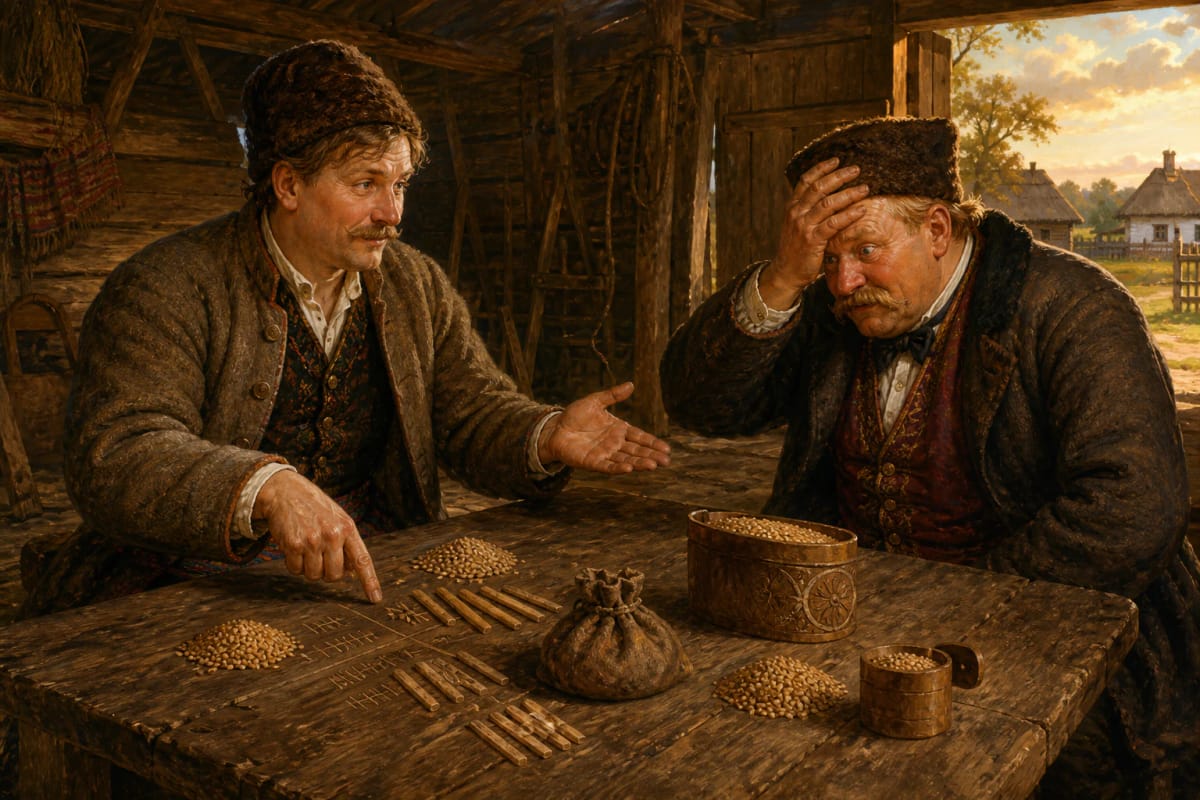
A farmhand serves a master, but the master tries to pay less, evade a promise, or count the work in such a way that the farmhand is wronged.
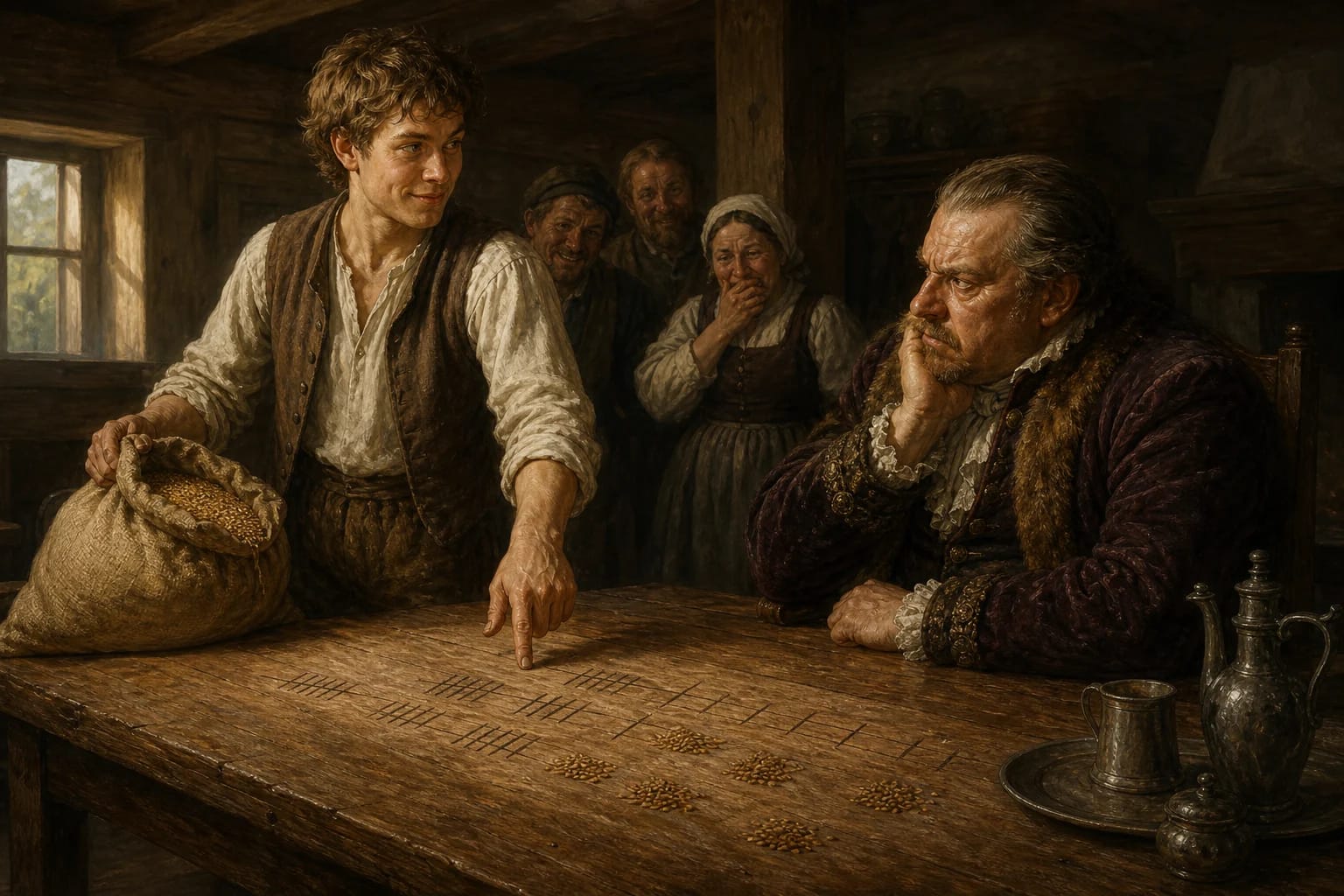
The farmhand does not attack the matter directly. He accepts the master's rules and uses them against the master himself: he counts differently, answers ambiguously, or presents an accounting that the master cannot deny.
In the ending the master is shamed, and the farmhand receives what belongs to him or at least restores the feeling of justice within the story.
Interpretation
This tale is a form of social tension. It lets the listener laugh at an unjust master and shows that a hired worker is not powerless.
Settlement here means more than money. It is an accounting of language and justice: whoever can name work precisely can defend himself.
The farmhand's cleverness is not random lying. It is a response to a stronger person's attempt to abuse his position.
History and variants
Conflicts between farmhands and masters are common in Lithuanian tales because they draw on real social relations: service, wages, debt, and dependence.
There is no single date of creation. Variants change the kind of work and the trick of settlement, but they keep the farmhand as a clever weaker figure.
In the classification used by Visuotinė Lietuvių enciklopedija, this is a domestic tale. Plots about agreements between master and servant, or hiring contracts, belong to a broad international field of master-servant contests in the Aarne-Thompson-Uther system, especially ATU 1000-1029, including ATU 1000, "The Contract Not to Become Angry." Lithuanian variants are described in Bronislava Kerbelytė's catalogue of narrative folklore (1999-2002), where the unjust master loses to the precision of the farmhand's mind.
What to explain to visitors
The tale is not only a funny anecdote. It shows a folk imagination of justice, where unfairness can be turned upside down at least in storytelling.