
- Genre
- Animal tale
- Source status
- variant tradition
- Motifs
- fox, sled, winter, deception, gullibility
The Fox's Sled, Lapės rogutės
The tale
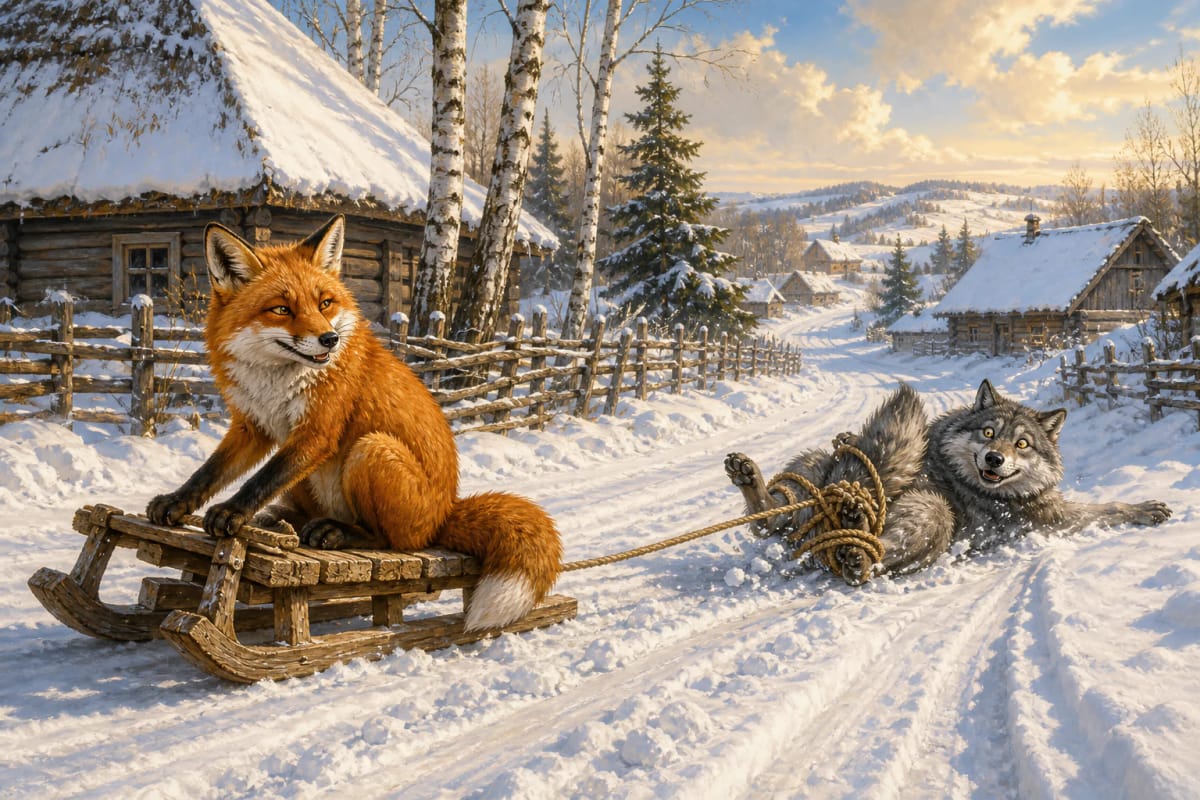
The fox thinks up a way to use winter, the road, and other animals' gullibility. The sled becomes not just an object but a tool of deception: through it the fox gains something, escapes, or mocks a stronger character.
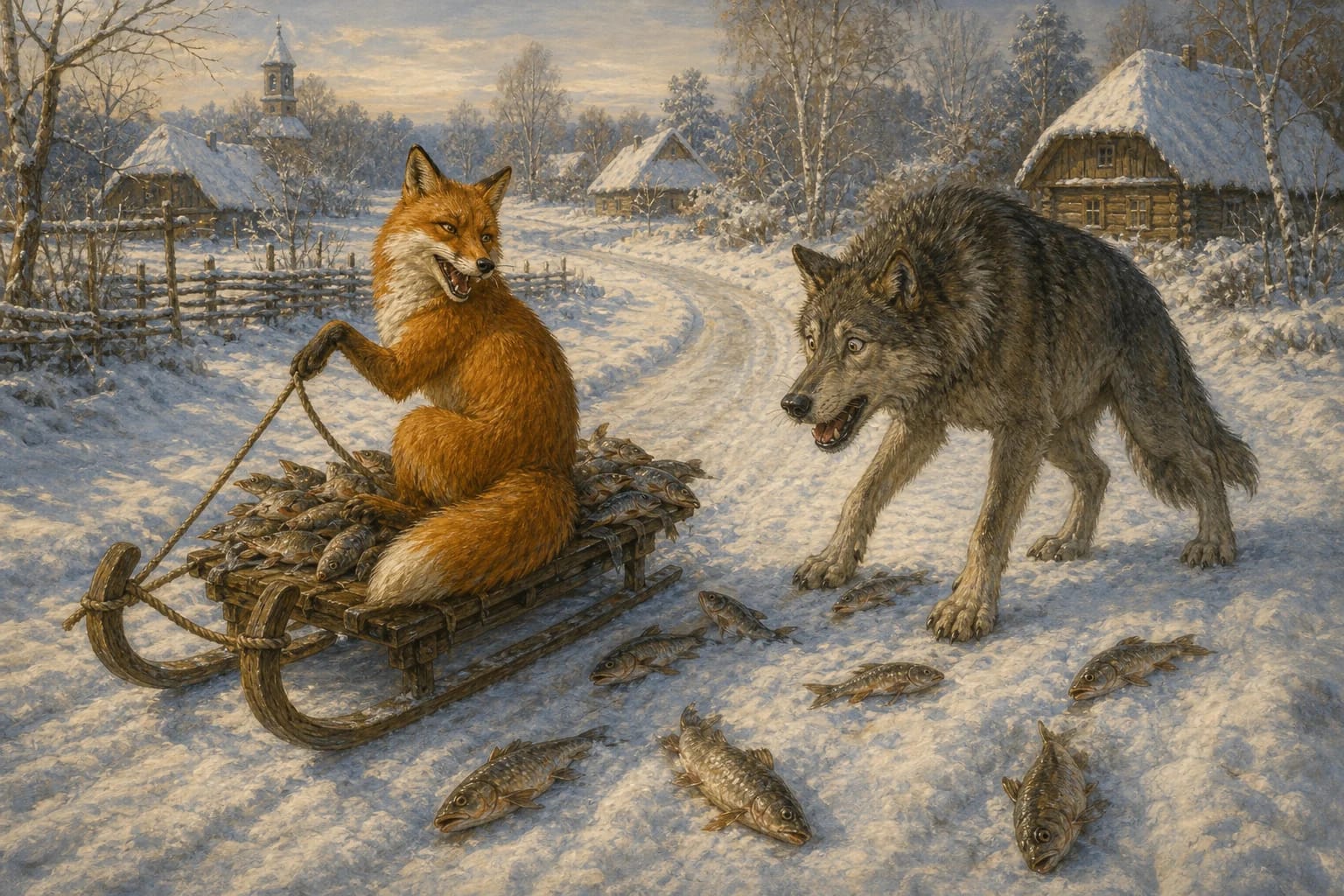
The wolf, bear, or another animal believes the fox's words and falls into a comic situation. The fox avoids direct battle, because her strength is speech and clever control of the situation.
In the ending the gullible character is deceived and the fox gets away. The tale is often told lightly, with laughter, because its essence is the mechanism of trickery.
Interpretation
The Fox's Sled shows the fox's typical role in Lithuanian animal tales. She is weaker than the wolf or bear, but she wins through flexible intelligence.
The winter setting strengthens the comedy: sleds, ice, road, and cold become the conditions in which gullibility quickly turns into shame.
The tale is not simple praise of the fox. It lets the listener laugh at the deceived figure while also reminding us that cleverness without conscience can be dangerous.
History and variants
Fox-and-wolf plots are among the most vivid parts of animal tales. There is no exact date of creation; what matters is the network of variants and recognizable character roles.
Variants change the details of the deception, the sled, or the winter circumstances, but the fox's cleverness remains the axis.
These episodes belong to one of the oldest international animal-tale cycles about the fox and the wolf. In the Aarne-Thompson-Uther system, the fox's theft of fish, pretending to be dead and throwing fish from a sled, is ATU 1, "The Theft of Fish," while luring the wolf to fish with his tail through an ice hole until it freezes is ATU 2, "The Tail-Fisher." Lithuanian animal-tale variants, about 2,500 in all, are classified in the catalogues of Jonas Balys (1936) and Bronislava Kerbelytė (1999-2002).
What visitors can understand
The tale helps explain why the fox in Lithuanian folklore is almost always a figure of speech, cleverness, and deception.