
- Genre
- Mythological sakme
- Source status
- folkloric
- Motifs
- endless cloth, Laumės’ gift, taboo against looking for the end, curiosity, linen
The sakme
A poor woman walked through a hollow and saw white cloths. They lay as if spread out to dry, but no human being was visible nearby.
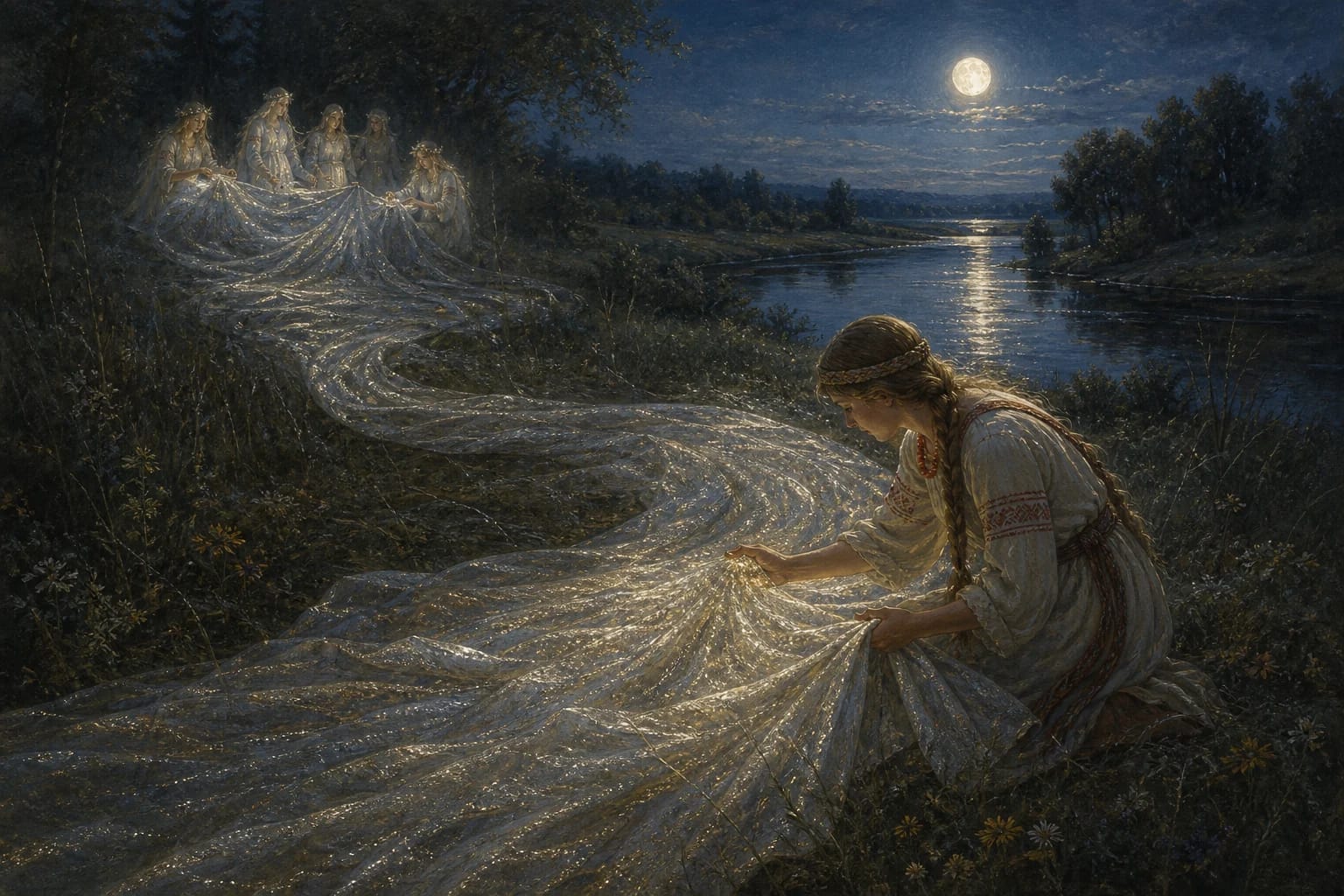
The woman thought she could take one cloth. When she began gathering it, a voice sounded from somewhere: cut and sew, only do not look for the end, and it will last your whole life.
She brought the cloth home and sewed from it for a long time. However much she cut, there was enough. But one day curiosity overcame her: she wanted to see what was inside the cloth and where its end lay.
As soon as she unwound the fabric to the end, the wonder ceased. The cloth became ordinary and never renewed itself again.
Interpretation: what does the Laumės’ cloth mean?
This sakme is about a gift with a condition. The Laumės’ cloth can feed and clothe, but it works only when the human being respects the prohibition.
The ban on looking for the end marks the boundary between use and possession. The woman may sew, but she may not fully uncover the mechanism of the wonder.
Curiosity here is not a virtue of knowledge. It is the wish to test a gift in a way that makes it lose its living power.
The source variant
Vaikams.lt: „Laumių audeklai“, complete legend text. An editorial retelling of the specific cited variant, checked against its complete source narrative. This is not a literal transcript.
Cloth as a metaphor of fate
Cloth can signify the continuity of life. As long as the human being does not force the end, the thread continues.
For that reason the sakme stands close to fate stories: it asks how much a person should know, and when not knowing helps preserve the fullness of life.