
Lithuanian traditional foods
Žuvienė
Žuvienė is a fisherman's fish soup cooked from fish heads, bones, fillets, potatoes, carrots, onions, and spices. In coastal, lake, and camp traditions, it is often cooked outdoors from several fish species.
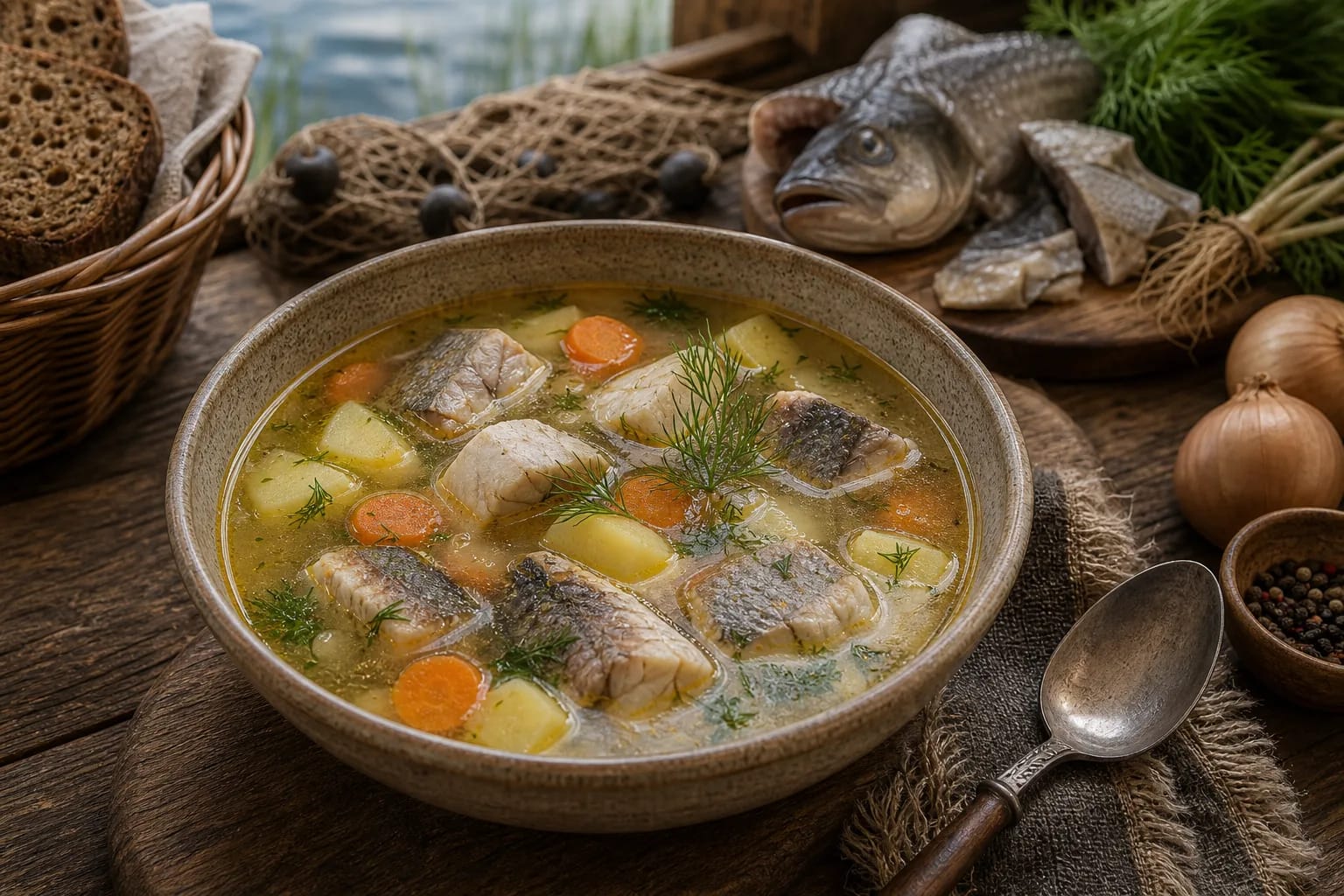
Food and heritage context
- Category
- Soups
- Type
- fisherman's fish soup
- Heritage status
- living coastal and lake tradition
- Context
- Fish broth, lakes, Curonian Lagoon, potatoes, carrots, dill, fisherman's cooking
Names and variants
Fisherman's žuvienė, Pamario žuvienė
Fisherman's soup
Žuvienė is practical fisherman's cooking: soup is made from parts of the catch, with fillet added at the end. Coastal and lake fishing in Lithuania is old: the Curonian Lagoon and numerous lakes supplied perch, bream, zander, pike, and smelt, from which fish soup is cooked.
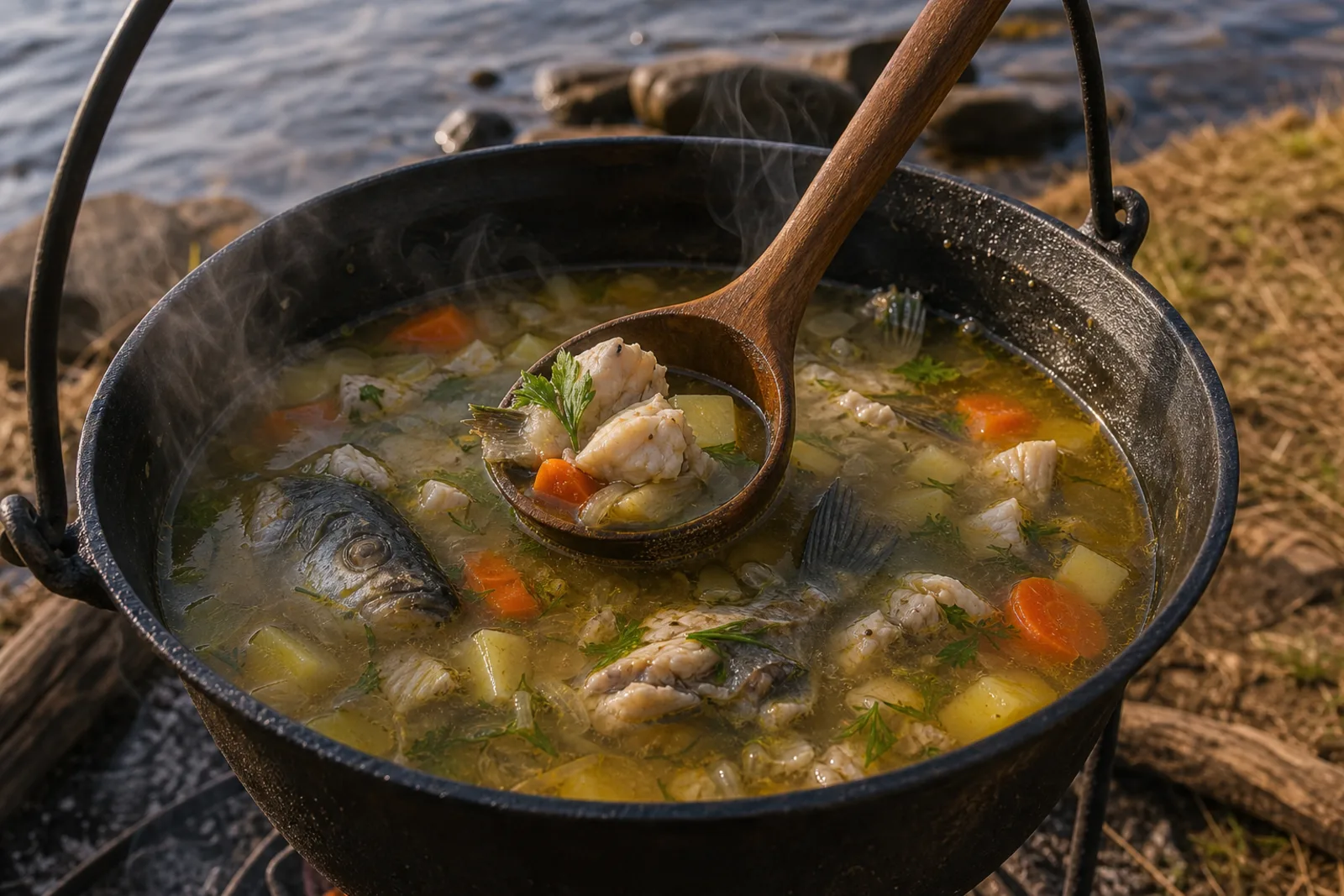
In the coastal region and lake districts it may be cooked outdoors, in a large pot, from several fish species. Descriptions of Dreverna žuvienė emphasize that flavor grows stronger with fish variety, and that the fish should be local lagoon fish, not just any accidental sea fish.
This is a dish in which the fisherman's practice becomes a culinary rule: smaller fish, heads, and tails give the broth, while larger pieces go into the pot only when the vegetables are almost cooked.
Broth is the base
Good žuvienė does not begin with fillet. First a broth is cooked with bones, heads, onion, bay leaf, or dill stems, then strained.
Fillet and attractive fish pieces are added at the end because if overcooked they fall apart and the soup loses clear texture. For that reason the fish-soup pot is better not stirred vigorously.
Which fish to choose
Good žuvienė is often cooked from several species: some give strength to the broth, others provide neat pieces in the bowl.
It is important not to overcook the fillet because it falls apart quickly.
Recipe
How is žuvienė cooked?
Good žuvienė begins with broth: heads, bones, and fins give flavor, while fillet is added at the end so it does not overcook.
Ingredients
Method
- Cook broth from fish heads and bones with onion, bay leaf, and pepper.
- Strain the broth. Add potatoes and carrot and cook until soft.
- Add fish fillet at the end and cook only a few minutes.
- Season with dill, salt, and pepper.
Notes
It is better to remove gills from heads because they can give bitterness.
Žuvienė: frequently asked questions
What fish is best for žuvienė?
Several species together work well: pike, perch, bream, zander, or other local fish.
Should fish heads be boiled?
Yes, they give flavor to the broth, but it is better to remove the gills.
When should fillet be added?
At the end, when the vegetables are already soft.
Does žuvienė have to be clear?
It may be clear or thicker with tomatoes or cream, depending on the tradition.
Can it be cooked over a fire?
Yes, that is a very natural fisherman's way to cook and serve it.
How can muddy flavor be avoided?
Use fresh fish, remove the gills, and do not boil the fish too long.