- Category
- Night and sleep beings
- Domain
- Sleep, pressure, nightmare, night suffocation, fear
- Source status
- folklore
slogutė, slogutis
Who are Slogutis or Slogutė?
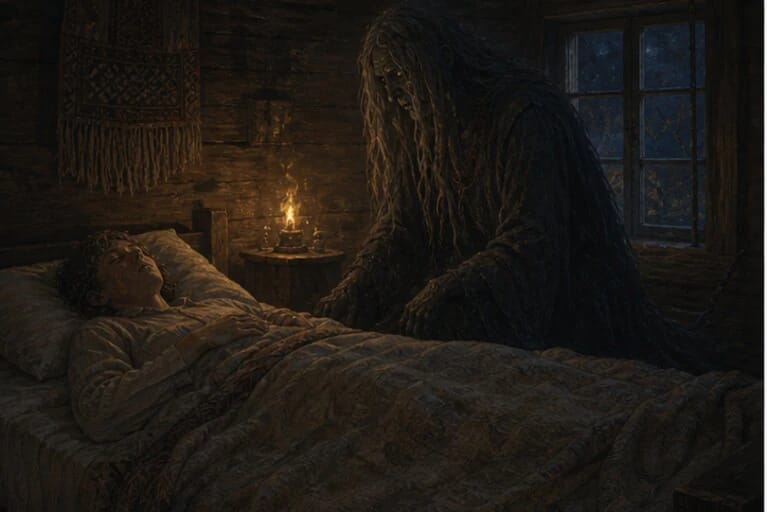
Slogutis or Slogutė is a folklore being of night and sleep, associated with pressure, breathlessness, nightmare, and the feeling that something presses on a sleeping person. It is one of the clearest examples of mythology explaining a bodily experience.
A modern person may connect such a state with sleep paralysis, but folklore personifies it: the pressure becomes a being that comes at night.
Sources and studies of Slogutis
The theme of Slogutis is studied in Lithuanian folklore research as a mythological explanation of night pressure and sleep experience. This is not a deity and not a single clearly cultic figure.
For that reason the most important thing in the sources is not a hierarchy of names, but the function of the stories: a person experiences frightening bodily immobility or pressure and explains it through a night being.
How does Slogutis act?
Slogutis is usually associated with the bedroom, bed, night, and the human body. It may press on the chest, suffocate, weigh down, prevent movement, or cause a heavy dream.
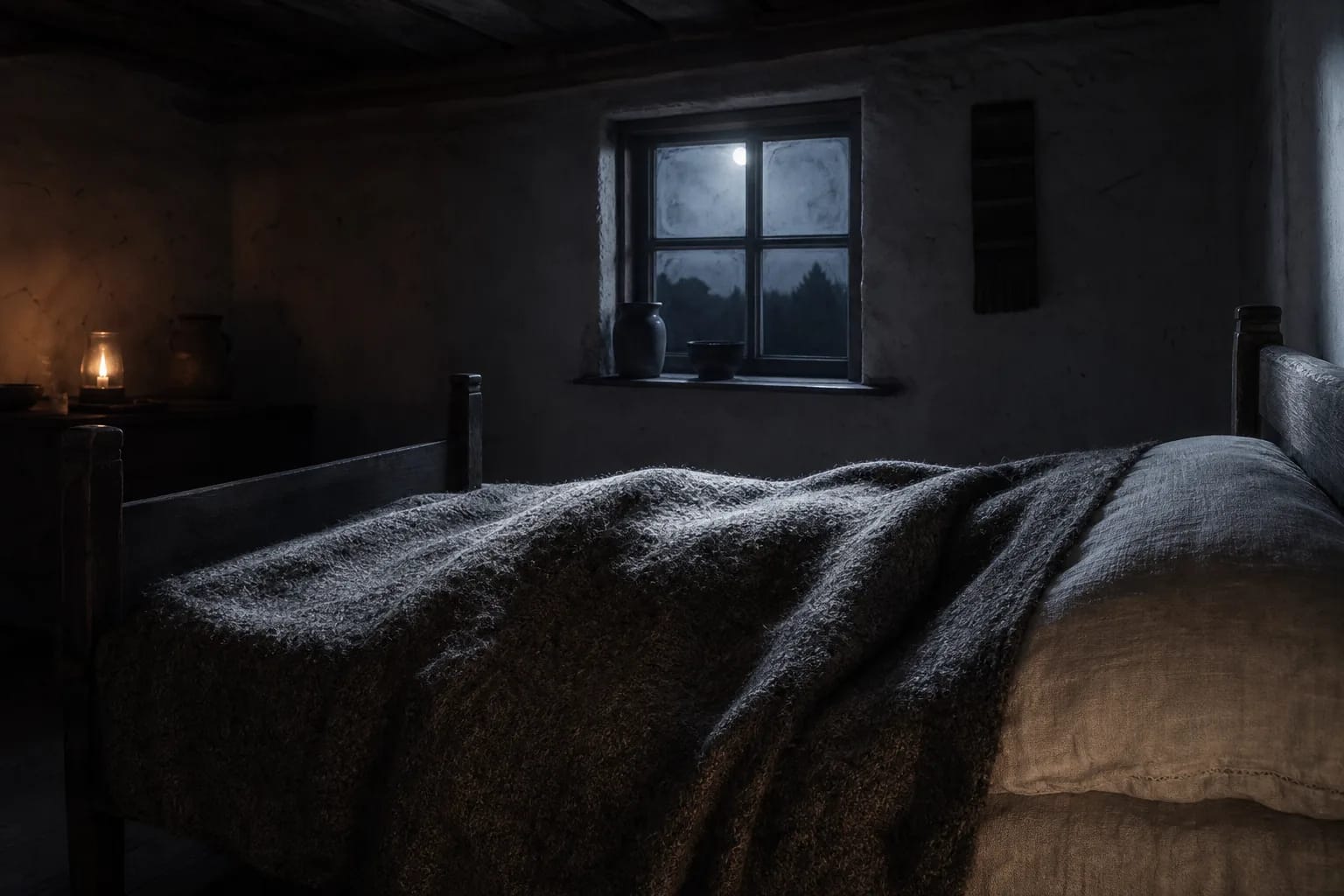
This image captures the logic of a nightmare very precisely: danger comes when a person is powerless, asleep, and unable to control the body easily.
Slogutis and sleep paralysis
Although folklore is not a medical explanation, the image of Slogutis is close to the experience of sleep paralysis: a person wakes or half-wakes, feels pressure and fear, and sometimes senses or sees a presence.
The mythological story gives that experience a form. Instead of an abstract disorder, there is a being one can reckon with, guard against, or try to identify.
Slogutis and household protection
Night beings are often connected with protective acts: prayers, prohibitions, the order of bed or threshold, and sleep rituals. It was believed that slogutis entered through a tiny opening, such as a keyhole or crack, so such openings were blocked. People defended against it by placing a knife, scissors, or another iron object under the pillow or near the bed. Even when specific practices differ, their purpose is the same: to protect the vulnerable sleeping person.
Slogutis shows that in Lithuanian mythology danger may lie not only in a forest or bog, but also in the most intimate space: the bedroom.
Slogutis today
The image of Slogutis connects folklore with familiar experiences at night: nightmares, a feeling of pressure, inability to move, and fear.
Slogutis offers a folkloric explanation of frightening experiences at night. The story is not a medical diagnosis, even when its descriptions of fear and immobility feel familiar today.